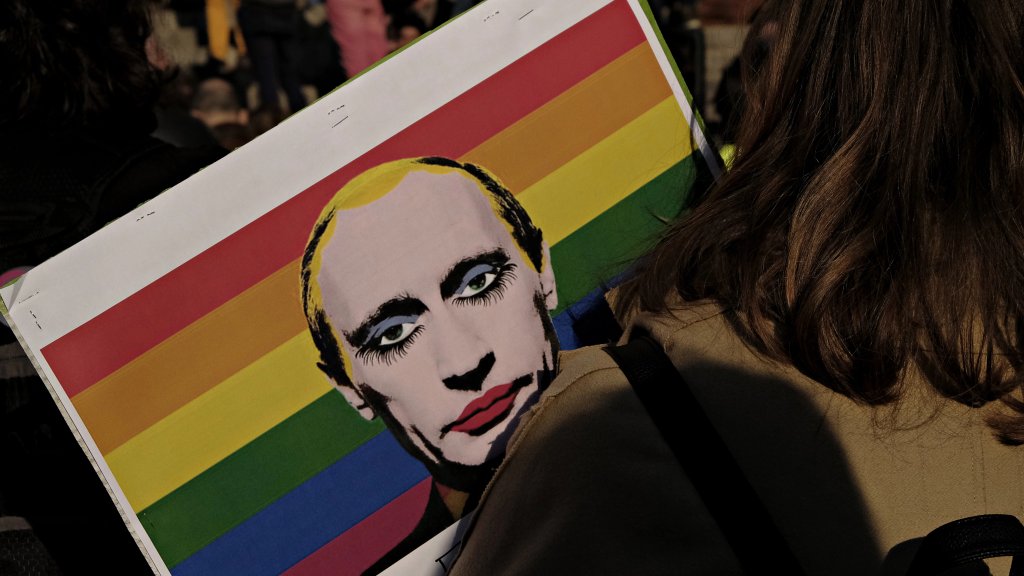
The Russian LGBT Network is ending its public work. The organisation says the move follows its designation as ‘extremist’ (German) by a court in St Petersburg. The ruling makes it too risky to continue its existing work publicly, the network has now announced. The country’s largest coming-out advice centre for gay men and lesbians, Wychod, (German) had already faced a similar situation in the spring.
Key points at a glance
- The Russian LGBT Network is ending its public work.
- The move follows a court in St Petersburg designating the organisation as ‘extremist’.
- The organisation warns of additional risks for staff, supporters and people seeking help.
- The network was founded in 2006 and supported LGBTQ+ people across Russia.
- Human rights organisations see the ruling as part of Russia’s intensified crackdown on LGBTQ+ organisations.
- Human Rights Watch reports that nine LGBTQ+ organisations were banned in seven regions between March and May this year.
LGBT Network ends its work
The court designated the organisation as ‘extremist’ in April following a lawsuit brought by the Russian Ministry of Justice. According to the network, this means its work can no longer continue in its previous form. ‘Any connection to the organisation can create additional risks for the people we want to support and protect,’ the organisation has now explained. In a statement, the network wrote: ‘For many years, the Russian LGBT Network has brought initiatives and activists together and supported queer people across the country.’ However, its ‘extremist’ status had made it ‘impossible’ to continue this work in the same form.
The decision was made following a comprehensive review of the dangers over recent months. ‘We made this decision after a serious risk assessment,’ the network explained. Continuing its public work could endanger people who had been involved in the organisation’s activities, supported it or received help from it. ‘We cannot control the repressive environment, but we can do everything we can to avoid creating additional risks for people. People’s safety comes first,’ it added.
Intensifying pressure on LGBTQ+ people
The Russian LGBT Network was founded in 2006 and developed into an important organisation for LGBTQ+ human rights work and crisis support in Russia. The network coordinated support in various regions of the country. Internationally, the organisation became known, among other things, for supporting gay people fleeing persecution in Chechnya in the late 2010s. These efforts took place against a backdrop of increasingly severe restrictions on the rights of LGBTQ+ people in Russia over many years.
A major turning point was the law against so-called ‘LGBT propaganda’ passed in 2013, the anti-gay law (German). In 2023, Russia’s Supreme Court then designated the so-called ‘international LGBT movement’ as ‘extremist’ (German) and banned it. Human rights organisations see this as a further expansion of the state’s powers to act against LGBTQ+ visibility and organisations. Journalists from Parni+, the largest Russian-language LGBTQ+ news website (German), were also forced into exile this summer because of Russian laws.
Criticism from Human Rights Watch
Human Rights Watch said Russian courts had designated a total of nine LGBTQ+ organisations in seven regions as ‘extremist’ and banned them between March and May this year alone. Hugh Williamson, Europe and Central Asia director at Human Rights Watch, said the authorities were ‘intensifying the criminalisation’ of people who support LGBTQ+ people, going ever further and becoming ever more radical. Williamson urged: ‘The authorities should overturn all court rulings and criminal convictions based on these unfounded allegations of “extremism”.’








