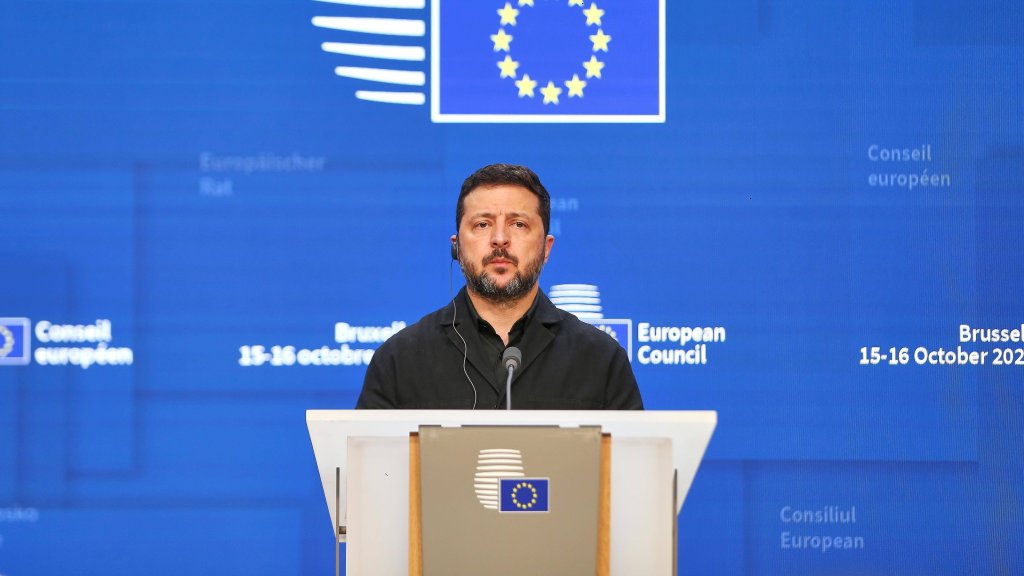
The Ukrainian government wants to improve protection for LGBTQ+ people against discrimination, hate speech and violence. President Volodymyr Zelenskyy has adopted a new national human rights strategy intended to benefit, in particular, population groups at heightened risk of human rights violations.
Key points at a glance
- New human rights strategy: President Volodymyr Zelenskyy wants to strengthen protection for particularly vulnerable population groups, including LGBTQ+ people, children, veterans and people with disabilities.
- Greater protection against hate crime: Police and the judiciary are to receive better training. Crimes motivated by hatred and intolerance are to be prosecuted more consistently.
- Queer rights in law: Sexual orientation, gender identity and gender expression are to receive greater consideration in legal safeguards.
- Scepticism towards Zelenskyy: Earlier contradictory policy initiatives on queer issues, including a controversial draft of a new civil code, raise questions about the reliability of the announced reforms.
- No recognition of same-sex couples: The new strategy contains no provision for this. However, improvements are planned in access to legal advice, social benefits, healthcare and education.
- EU accession as the backdrop: Ukraine must further align its legislation with European human rights standards.
Legislation following EU pressure
The planned measures cover, among other things, the prosecution of hate crimes, awareness-raising within state institutions and access to public services. Sexual orientation, gender identity and gender expression are also to receive greater consideration in Ukrainian law in future. The announcements are linked to Ukraine's ambition to join the European Union. To do so, the country must adapt its legislation in various areas to European standards. These include the protection of fundamental human rights and measures against discrimination. The new strategy could bring important improvements for queer and gay people. However, questions remain, particularly over the legal recognition of same-sex partnerships.
LGBTQ+ people at risk
A central element of the human rights strategy is its explicit recognition of LGBTQ+ people as a population group that may be at heightened risk of human rights violations. This is intended to place greater obligations on state institutions to respond to discrimination and violence directed at people because of their sexual orientation or gender identity. In particular, the government wants to improve protection against hate speech, physical assaults and other forms of so-called “disadvantage resulting from intolerance”.
Gender expression is also to be taken into account when designing legal safeguards. Alongside queer people, the strategy names other groups whose rights are to be strengthened. These include children, war veterans, people with disabilities, national minorities, internally displaced people and people particularly severely affected by Russian aggression. The human rights strategy thus takes a broader approach, considering different groups in society and their differing protection needs.
Improving the prosecution of hate crimes
The new strategy places particular emphasis on the criminal prosecution of acts motivated by hatred or intolerance. Such offences are to be investigated more thoroughly and punished more effectively in future. Additional training is planned for police officers and judges to this end. They should be better able to identify when an offence has a discriminatory motive and which legal measures are required. The public is also to receive more information about existing rights and the protection available from the state. The aim is to make it easier for people affected by hate crime to exercise their rights and receive state support. For LGBTQ+ people, such measures are particularly relevant when they are attacked or threatened because of their sexual orientation, gender identity or gender expression. The strategy also provides for new criminal law mechanisms to improve the recording and prosecution of hate crimes. However, the specific legislative changes that will result will only become clear during implementation.
Announcements met with reservations
Despite the announced improvements, there are several reasons within the LGBTQ+ community to view the new strategy critically. A significant factor is the contradictory policy developments on queer issues during Zelenskyy's presidency. While the government announces measures to combat discrimination and commits to moving closer to European human rights standards, other legislative proposals have prompted fears of possible restrictions on LGBTQ+ rights. The debate over a new Ukrainian civil code is particularly controversial. The proposed civil code has drawn criticism over its potential impact on the legal status of same-sex couples (German). Assessments of the new human rights strategy will therefore depend crucially on whether the announced measures are followed by binding legislative changes and how these fit with other planned reforms.
Homophobic civil code
The concerns of LGBTQ+ organisations are specific (German). In April 2026, the Ukrainian parliament passed a draft of a new civil code at its first reading. The draft provides for a definition of family unions that excludes same-sex couples. According to human rights organisations, this could even lead to the loss of existing legal protections. Amnesty International and Human Rights Watch strongly criticised the plans. They warned that enshrining discrimination in law could also conflict with Ukraine's international human rights obligations.
In the organisations' assessment, provisions recognising family relationships exclusively between men and women are particularly problematic. Provisions under which a marriage could be declared invalid following a change of legal gender also drew criticism. Added to this are vague moral requirements intended to play a role in court decisions. The Ukrainian LGBTQ+ organisation Nash Svit warned that this could strip same-sex couples of rights to which they are entitled under existing law in certain circumstances. Following protests and international criticism, those behind the proposals expressed their willingness to make changes. However, whether the disputed provisions will be removed for good remains unclear.
Supreme Court ruling
The debate over the civil code is also significant because Ukrainian courts have already ruled in favour of same-sex couples. In a landmark decision in 2026, the Supreme Court recognised a same-sex partnership as a family relationship (German). Back in 2023, the European Court of Human Rights found that Ukraine's failure to legally recognise same-sex partnerships violated the European Convention on Human Rights. Nevertheless, the new human rights strategy contains no explicit commitment to introducing registered civil partnerships. Relevant legislative proposals are already before the Ukrainian parliament but have yet to make decisive progress.








