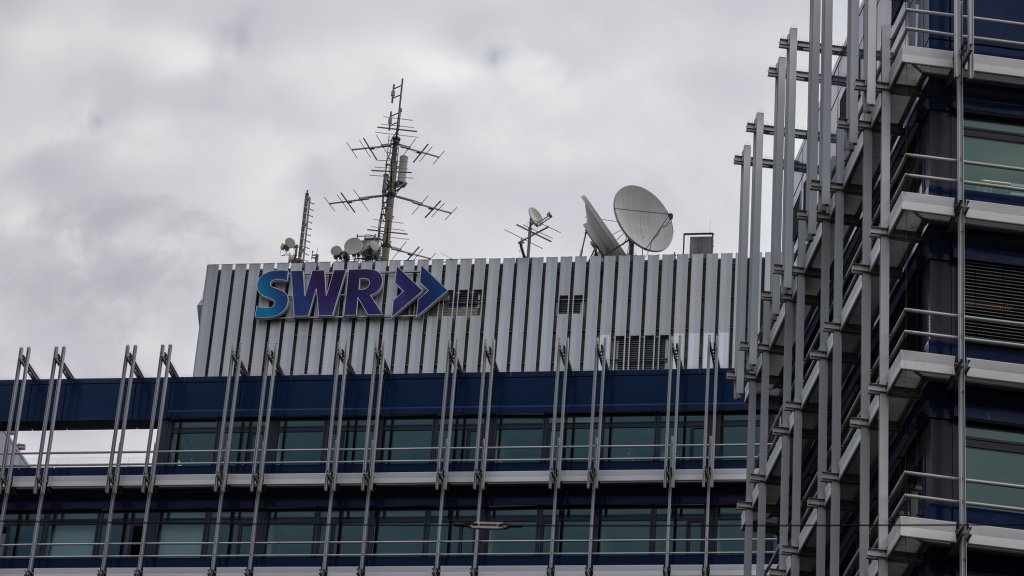
For the first time, the Broadcasting Council of Südwestrundfunk (SWR) will have a dedicated seat for queer people to represent themselves. The new SWR Broadcasting Council, which begins its work at the end of September, will thus give a previously unrepresented social perspective a place on the body, as the Baden-Württemberg and Rhineland-Palatinate branches of LSVD+ emphasise.
Key points at a glance
- The new SWR Broadcasting Council will have a seat for queer people to represent themselves for the first time.
- The Baden-Württemberg and Rhineland-Palatinate branches of LSVD+ will jointly hold the seat.
- Long-standing trans activist and author Janka Kluge from Stuttgart has been named as the representative.
- The new SWR Broadcasting Council begins its work at the end of September and will serve until 2031.
- The new SWR State Treaty provides for a seat on the Broadcasting Council for LGBTQ+ people to represent themselves for the first time.
- This is based on the principle set out by the Federal Constitutional Court in 2014 that broadcasting bodies should reflect as diverse a range of perspectives as possible.
- LSVD+ welcomes the seat as an important step towards greater queer visibility and nuanced reporting.
Queer self-representation for the first time
The Baden-Württemberg and Rhineland-Palatinate branches of LSVD+ – Verband Queere Vielfalt will jointly hold the seat. Long-standing trans activist and lesbian author Janka Kluge from Stuttgart has been named as the representative. Presenter and artist Janboris Ann-Kathrin Rätz from Mainz has been recruited as her deputy. “Public service media have a particular responsibility for social cohesion and diversity. Through our joint representation on the new Broadcasting Council, we want to ensure that queer perspectives are firmly embedded in south-western Germany and inform programming,” explains Ulrike Goth, a member of the board of LSVD+ in Baden-Württemberg.
The Rhineland-Palatinate branch also sees the new seat as an important step for the portrayal of queer people in the media. “Queer visibility in the media can reduce prejudice and hostility. On the Broadcasting Council, we want to help ensure that queer issues are portrayed in a nuanced, respectful and diverse way – beyond clichés and polarisation,” adds Joachim Schulte, a member of the board of LSVD+ in Rhineland-Palatinate.
New representation on the Broadcasting Council
According to LSVD+, unlike other social groups, queer people have so far been unrepresented on many supervisory bodies of German media organisations. This is now set to change at Südwestrundfunk. The move follows years of campaigning by civil society. The new SWR State Treaty created a seat on the SWR Broadcasting Council for LGBTQ+ people to represent themselves for the first time. In doing so, the two state governments and the broadcaster are following the principle of safeguarding diversity, as set out by the Federal Constitutional Court in its 2014 ruling on the ZDF State Treaty. The composition of broadcasting bodies must bring together people with “as diverse a range of perspectives and experiences as possible from all areas of society”, the ruling states. The new SWR Broadcasting Council’s term runs until 2031.
Portrayal of queer issues
In LSVD+’s assessment, much has improved in media reporting on lesbian, gay, bisexual, trans and intersex people, as well as queer people, in recent years. Many editorial teams now report on queer issues in a serious and nuanced way. At the same time, some media outlets continue to portray queer people and issues in a distorted, sensationalist or derogatory manner. A strong queer voice on the Broadcasting Council is therefore intended to strengthen this perspective systematically in future. Back in 2015, a successful LSVD+ campaign led to a seat on the ZDF Television Council. The representation now planned on the SWR Broadcasting Council will also provide a dedicated seat for queer self-representation in south-western Germany for the first time.








