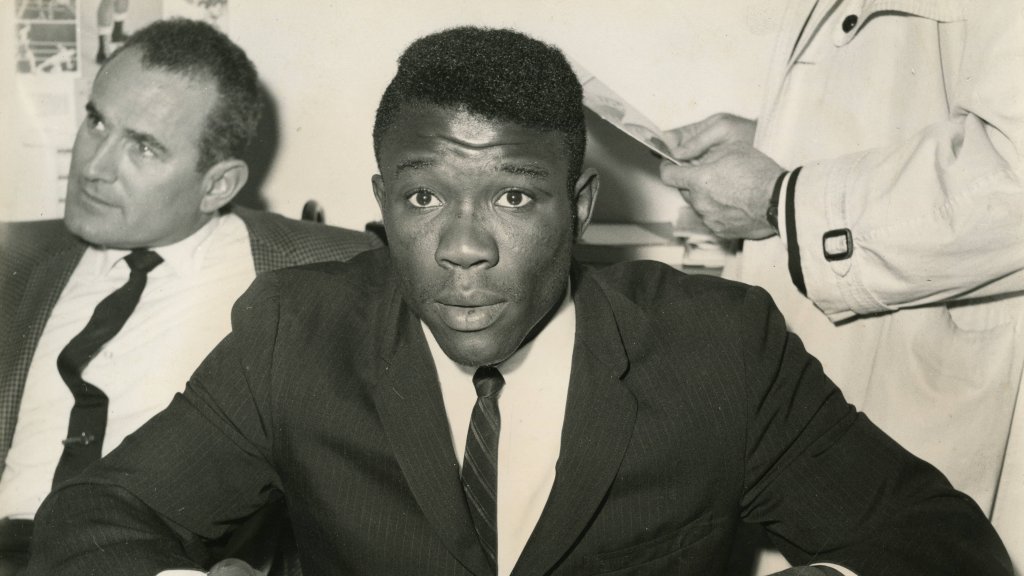
The American boxer Emile Griffith (1938–2013) was one of the great stars of his sport. He won world titles in three weight divisions, was later inducted into the Boxing Hall of Fame and was internationally renowned. Yet while the sporting world celebrated his achievements, he had to keep his homosexuality secret. His life story represents an era in which a gay man faced social ostracism even if he was one of the world's finest athletes.
Key points at a glance
- Emile Griffith and Benny “Kid” Paret met for the third time in March 1962. After homophobic insults before the fight, Griffith subjected his rival to a devastating beating in the ring.
- Paret fell into a coma and died ten days later. Griffith won the world title, but suffered from feelings of guilt throughout his life.
- Outside the ring, Griffith had to conceal his homosexuality. In 1992, he was brutally beaten and seriously injured after visiting a gay bar.
- It was not until 2008 that he spoke publicly about his sexuality and society's double standards. He died in 2013 at the age of 75.
A profound silence
The Amazon miniseries “The Greatest” tells the story of the early years of the young Cassius Clay, who later became famous as Muhammad Ali, and the rise of boxer Sonny Liston. It shows how American society in the early 1960s reacted to people who challenged established norms: Clay faced fierce hostility because of his close ties to the Nation of Islam, while Liston was seen as a menacing figure because of his criminal past and connections to the Mafia. Yet while society found ways to deal with Ali's radicalism and Liston's past, there was barely any room for a gay man. Griffith does not appear in the series – even though his story belongs to the same era.
Insults before the fight
Griffith and his bitter rival, the Cuban world boxing champion Benny “Kid” Paret, had already taken the world title from each other several times. Griffith won the title in April 1961, and Paret reclaimed it in September. In March 1962, the two met for the third and final time. Griffith had been born in the US Virgin Islands. Away from the ring, however, he lived with an open secret: he designed women's hats and secretly visited New York's gay bars. In 1962, homosexuality was not merely a social scandal. Same-sex sexual acts were criminal offences in many US states, and homosexuality was still regarded as a mental illness. Even a rumour about a boxer's homosexuality could threaten his livelihood.
At the weigh-in before the third fight at Madison Square Garden, Paret decided to bring up the rumours publicly. He approached Griffith from behind, mimicked a swaying movement of the hips and insulted him with a deeply degrading homophobic slur in Spanish: “Hey, you faggot … I'm going to finish you and your husband off.” Griffith had to be physically restrained from attacking Paret. Given the homophobic climate, the media refused to print the slur used. Instead, they resorted to euphemisms such as “unmanly” or “against men”. But Griffith could not shake off the hurt caused by the insult. He took his anger into the ring. In the twelfth round, an enraged Griffith forced Paret onto the ropes and hit him 25 times with tremendous force within a few seconds. Paret collapsed and fell into a coma. Ten days later, he died.
Guilt and withdrawal
The consequences of the fight shook more than just Griffith. The then governor of New York, Nelson Rockefeller, launched a comprehensive investigation into the brutality of boxing. Public outrage was so great that the television network ABC stopped its nationwide live broadcasts of boxing matches. It was a severe blow to the sport. Griffith reclaimed the world title that evening. But the tragedy had broken him. Afraid of injuring another person so badly, he held back in the ring from then on. Although he fought another 80 bouts over the course of his career, he secured only twelve more knockout victories. Instead, he focused on winning on points.
Griffith retired in 1977. By then, he had achieved 85 victories and held a world title five times. In 1971, he had married the dancer Mercedes Donastorg. The marriage ended in divorce less than two years later. After retiring from boxing, Griffith worked as a prison officer at a juvenile detention centre in New Jersey. There he met Luis Rodrigo, who later became his long-term partner and adopted son. The adoption gave Rodrigo, who had grown up without a father, a stable family environment. At the same time, it provided a socially accepted façade for the two men's romantic relationship.
Assault and decline
Griffith remained involved in boxing and occasionally trained other fighters. Despite his success, he experienced financial difficulties in retirement. In 1992, he was brutally beaten by a group of men after leaving a gay bar near New York's Port Authority Bus Terminal. The attackers used baseball bats and chains. Griffith suffered serious injuries, including substantial kidney damage. He spent around four months in hospital, and at times his life was in danger. The assault left him with lasting health problems.
Griffith suffered from the physical and cognitive effects of the attack for the rest of his life. He later developed dementia. In 2004, filmmakers Dan Klores and Ron Berger arranged a meeting in New York's Central Park for their documentary “Ring of Fire: The Emile Griffith Story”. There, Griffith met Benny Paret Jr., who had been just two years old when his father died. The two men embraced and wept. Paret Jr. made it clear that he bore Griffith no grudge. After more than four decades of guilt and nightmares, Griffith thus found a measure of forgiveness and inner peace.
A statement about double standards
In his biography, published in 2008, Griffith spoke publicly for the first time about his sexuality and the double standards of a society that had cheered him as an athlete. In doing so, he made a statement that became one of the most powerful testimonies of his life story: “I keep thinking about how strange it is … I kill a man, and most people understand me and forgive me. But I love a man, and for so many people that is an unforgivable sin. That makes me an evil person.” Griffith died on 23 July 2013 at the age of 75 from kidney failure and the effects of dementia. His partner Luis was by his side.








