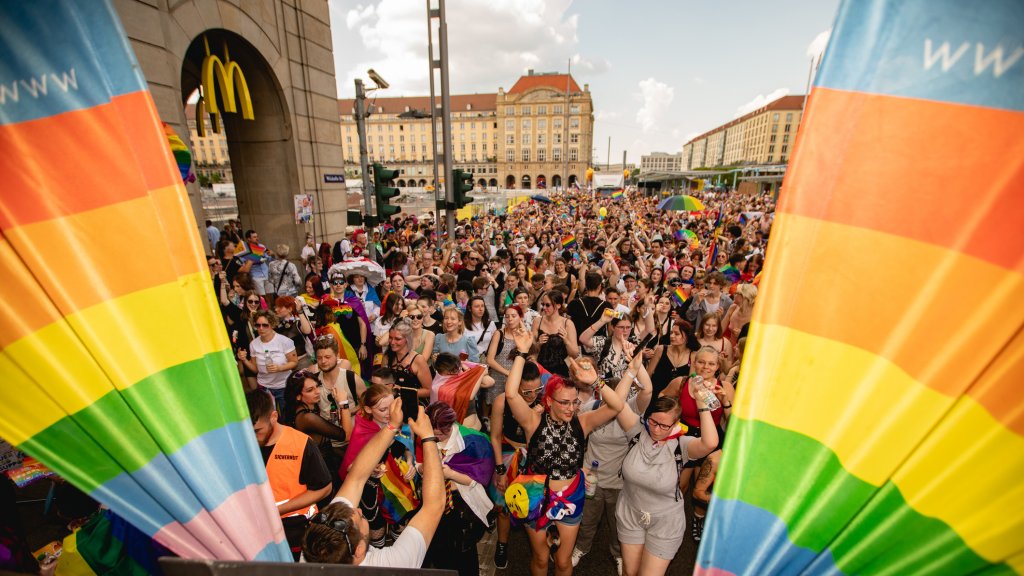
Dresden will host EuroPride 2029. CSD Dresden e.V. was awarded the hosting rights on Saturday, 10 October 2026, at the general meeting of the European Pride Organisers Association (EPOA) in Magdeburg. This marks the European Pride event’s return to Germany after 25 years: Hamburg was its last German host in 2004.
Bridges between East and West
The bid’s motto is “Turn Walls into Bridges”. Through this, Dresden’s Pride organisers aim to bring people together across national borders and build connections between East and West, generations and different lived realities. The concept combines queer visibility with opportunities to meet, culture and advocacy for human rights.
The years have been chosen deliberately: 1969 recalls Stonewall and the emergence of the modern Pride movement, while 1989 recalls the fall of the Berlin Wall. Four decades later, Dresden is set to become a meeting place for a European community. The organisers’ ambition extends beyond a single festival: the collaboration is intended to continue beyond 2029.
Programme from May to June
The bid documents envisage events in Dresden running from 14 May to 3 June 2029. The programme weeks are to be followed by the official opening on 26 May. A Pride Village on Neumarkt is planned for 26 May to 2 June.
Other plans include a human rights conference from 30 May to 1 June at the Deutsches Hygiene-Museum and a main stage on Altmarkt from 31 May to 2 June. These dates and venues come from the bid proposal; the details of the programme have yet to be developed.
Saxony in the European spotlight
Dresden was the only confirmed bidder for the 2029 edition. Nevertheless, the hosting rights still had to be awarded by EPOA’s member organisations. The association represents more than 200 Pride organisations in over 40 countries and awards the EuroPride licence.
The decision gives the Saxon capital an international platform for the concerns of LGBTQ+ people. The bid also explicitly envisages connections with other parts of Saxony. EuroPride is thus intended not only to strengthen the host city, but also to promote collaboration within the queer movement beyond the region.








