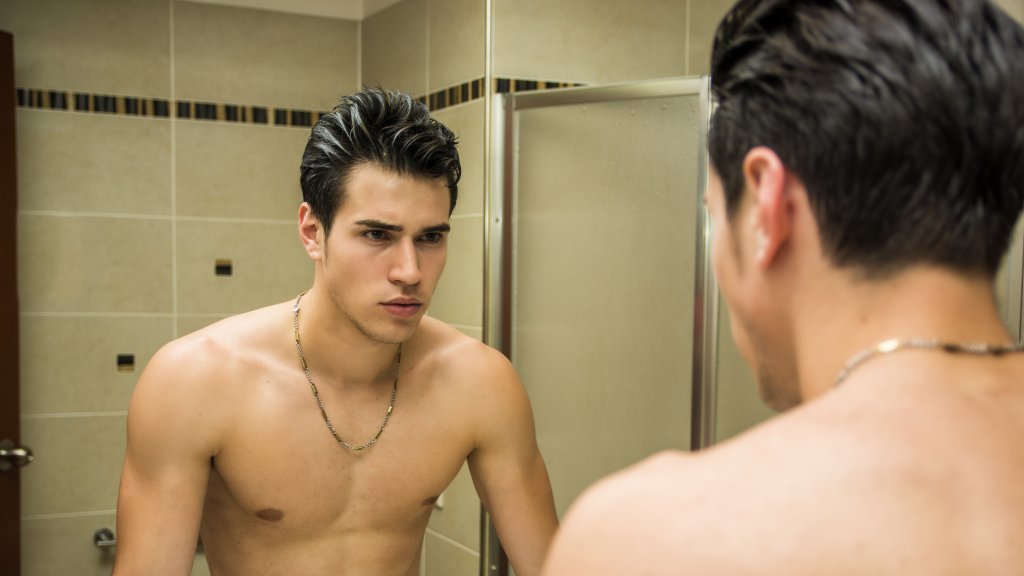
A body as muscular as possible, an attractive face, better skin or an optimised diet: the desire to improve one's appearance and personal performance is also a common topic in parts of the gay male community. On social media, these goals are increasingly discussed under the label ‘maxxing’. Now the US online dictionary Dictionary.com has named ‘maxxing’ its Word of the Year for 2026.
Key points at a glance
- Word of the Year 2026: the online dictionary Dictionary.com has chosen ‘maxxing’ as the year's most significant term.
- Self-optimisation as a trend: the suffix refers to improving one's appearance, health or other areas of life as comprehensively as possible.
- These topics also play an important role in parts of the gay community, sometimes with specific trends such as ‘ball-maxxing’.
- Rapid spread: ‘maxxing’ was used extremely frequently in digital media in 2026.
- The variant ‘looksmaxxing’ originally spread in incel forums and the so-called manosphere.
- Dangerous extremes: alongside exercise and skincare, risky practices are also promoted under the term.
The jury's decision
The term refers to the attempt to get as much as possible out of a particular area of life. Internet users now encounter it in numerous variants – from ‘looksmaxxing’ for physical appearance to ‘sleepmaxxing’ for the most restful sleep possible. The jury's decision reflects the sharp increase in the expression's use. At the same time, it points to the social questions associated with the growing drive towards self-optimisation. However, one of the term's best-known variants comes from online circles that face fierce criticism for misogynistic attitudes, heightened homophobia (German) and problematic beauty ideals.
What does ‘maxxing’ mean?
The word derives from the English ‘maximising’, which means ‘maximieren’ in German. In internet slang, ‘maxxing’ is used as a standalone expression or a suffix. It means pursuing a particular activity especially intensively or optimising an area of life as much as possible. The principle can be applied to almost anything. Someone seeking to improve their sleep is therefore practising ‘sleepmaxxing’. People who want to increase their protein intake in a targeted way talk about ‘proteinmaxxing’. The term ‘cozymaxx’ is also part of this development. It describes the attempt to create the cosiest, most relaxing evening possible at home.
These coinages now extend far beyond traditional fitness and beauty topics. ‘Fibermaxxing’, for example, describes the effort to eat more fibre. ‘Tokenmaxxing’, by contrast, refers to using artificial intelligence tools as intensively as possible. The suffix can indicate both serious attempts at optimisation and ironically exaggerated descriptions of everyday habits. The term ‘ball-maxxing’ also spread in the gay male community (German), referring to enlarging the testicles.
An absurd pursuit
Research by Dictionary.com shows just how widely ‘maxxing’ has spread online. According to its findings, the expression appeared far more frequently in digital media in 2026: in August alone, for example, it occurred around 19 times as often as the monthly average for 2025. For the language researchers, this development also reflects a contradiction in society. Steve Johnson, director of lexicography at Dictionary Media Group, explained: ‘Maxxing stood out in particular because it captures a contradiction in how we approach modern life: we are constantly looking for ways to improve ourselves and get more out of everything, even as we recognise how exhausting or absurd this pursuit can become.’
‘Looksmaxxing’ and gay men
The trend is particularly visible when it comes to physical appearance. Internet users use ‘looksmaxxing’ to describe measures intended to improve their physical attractiveness as comprehensively as possible. These include targeted strength training, skincare, grooming and changes to personal style. Such topics also became more prominent in parts of the gay community in 2026. Body image, fitness ideals and notions of attractiveness have been, and continue to be, widely discussed there. Dictionary.com, however, traces the origins of ‘looksmaxxing’ to so-called incel communities and forums associated with the manosphere (German).
Origins in the manosphere
Incels are people who regard themselves as involuntarily celibate. Parts of this online scene are characterised by misogynistic and often homophobic attitudes, as well as rigid ideas about attractiveness and gender roles. The term manosphere describes various male-centred online circles, which include such communities. In these forums, users discussed how men could change their appearance to seem more attractive.
Some of the methods discussed involve ordinary measures such as exercise, grooming or skincare. Other approaches, however, go considerably further and can carry significant health risks. Among the figures who have become known as proponents of the looksmaxxing trend is influencer Braden Peters, who goes by the name ‘Clavicular’ (German). He has documented various attempts to change his appearance online. These include so-called ‘bone smashing’. In this dangerous practice, people hit themselves in the face with a hammer. It is based on the false belief that the blows can produce a more defined bone structure and more pronounced facial features. Such a method can, however, cause serious injuries and is not a safe way to alter one's appearance.
First appeared in 2015
The coinage is not new, however. According to Dictionary.com, examples of ‘looksmaxxing’ can be found in archived internet data as far back as 2015. Further variants had emerged by 2021. Another linguistic root lies in video gaming culture. The expression ‘min-maxing’ has been used in role-playing games for many years. It describes a strategy in which a character's strengths are maximised and their weaknesses kept to a minimum. In the Word of the Year selection, ‘maxxing’ beat other contenders. In 2025, ‘rage bait’ was named Oxford Word of the Year. The term describes content deliberately intended to provoke anger or outrage in order to generate attention and reactions on social media. With ‘maxxing’, a different phenomenon of everyday digital life now takes centre stage.








