
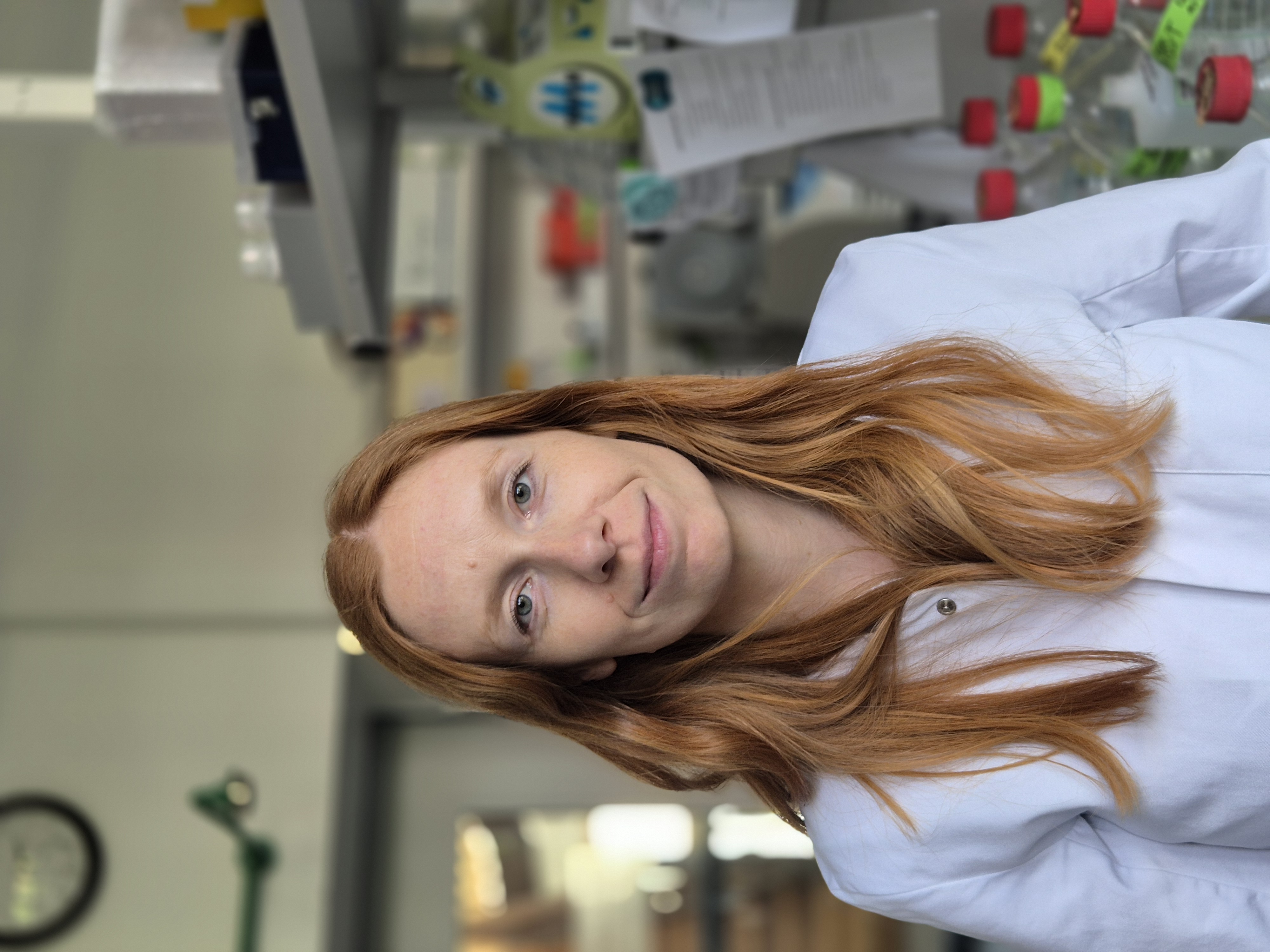
Our interviewee: Prof. Dr. Denisa Bojkova, study lead at the Institut für Medizinische Virologie Frankfurt.
Thousands of people in Germany have contracted mpox since 2022. Although the virus can potentially affect anyone, the infection spread almost exclusively among gay and bisexual men. Why this is the case is one of many unanswered questions – and a research team at the Institut für Medizinische Virologie Frankfurt is now working towards an answer. SCHWULISSIMO spoke to study lead Prof. Dr. Denisa Bojkova.
What is the most important finding of your current study?
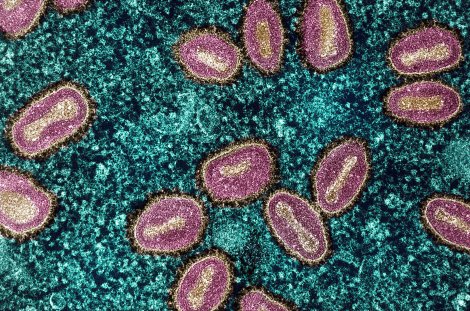
Mpox is a disease caused by the monkeypox virus. During the most recent outbreaks, transmission frequently occurred in connection with sexual contact, and the virus was repeatedly detected in semen – in some cases over several weeks. Until now, however, it was unclear whether semen merely carries the virus or itself influences how efficiently the virus can infect cells. Our study shows that semen can indeed enhance infection. We found that naturally occurring protein fragments in semen can form tiny fibre-like structures known as amyloid fibrils. These help viral particles attach more effectively to the surface of cells and enter them. This suggests that semen may do more than simply carry the virus: certain components can facilitate infection and thus potentially contribute to the sexual transmission of mpox.
But that does not make the semen itself more infectious – or does it?
Our findings do not show that semen itself is infectious, although other studies have demonstrated that infectious monkeypox virus can be present in semen. Rather, our data explain how components of semen can help the virus attach to and enter human cells more easily. This could mean that a smaller amount of virus is sufficient to cause an infection. More broadly, our findings also show that infection does not depend on the virus alone. The environment in which the virus encounters the body is also crucial. The route of transmission, the point of entry and the substances present there can influence how efficiently an infection takes hold.
What specific significance does this mechanism have for sexual contact between men?
The transmission of mpox depends on many factors. More recent studies suggest that sexual contact can create particularly favourable conditions for the virus. Studies of clade Ib in Africa, for example, showed that transmission occurred more quickly in presumed sexual transmission chains than through non-sexual transmission. During sex, the virus from genital or anal lesions can also come into very direct contact with sensitive mucous membranes. Our findings suggest that semen may contribute further by helping the virus attach to and enter cells more effectively. This could help explain why mpox was able to spread particularly efficiently within certain sexual networks. But it is only one part of the overall picture. Close skin contact, the structure of sexual networks and waning immunity in the population following the end of routine smallpox vaccination are also likely to have played a role.
Which lessons from recent years are particularly important to you?
Mpox can be a very painful disease, and full recovery can take several weeks. One of the most important lessons of recent years is that significant gaps in knowledge and care remain – particularly for people at increased risk of severe disease. These include, above all, immunocompromised patients, especially people with advanced HIV infection. In these patients, mpox can be much more severe and, in some cases, life-threatening. We also still know too little about possible long-term effects, such as persistent inflammatory responses or neuropsychiatric symptoms. Other unanswered questions include when an infected person is actually no longer contagious, how long infectious virus may remain in semen or vaginal secretions, and how well a previous infection with one clade protects against another.
Mpox is often associated with gay and bisexual men. How important is it to reach this group specifically without simultaneously giving the impression that mpox is a “gay disease”?
Both are very important. During the 2022 outbreak, most cases outside Africa occurred among gay, bisexual and other men who have sex with men. Targeted information and vaccination provision for these groups were therefore crucial, and remain important wherever transmission continues within sexual networks. At the same time, the global picture is much broader. Mpox can potentially affect anyone through close contact. During outbreaks in Africa, men, women and children became ill, and transmission occurred both through sexual contact and through other forms of close contact, as well as, in some cases, from animals to humans. Continuing to portray mpox primarily as a disease of gay men would therefore be scientifically misleading and could reinforce stigma. This, in turn, can lead people to delay testing or seeking medical help.
What does your study mean in practical terms for men who have sex with men?
Our study provides further evidence that sexual contact can create particularly favourable conditions for the transmission of mpox. However, it would be too early to derive entirely new prevention recommendations from our findings alone. Condoms can reduce certain routes of transmission, such as contact with semen, but do not provide complete protection against mpox. The virus is mainly transmitted through close contact with infectious lesions on the skin or mucous membranes, and these can occur on parts of the body not protected by a condom. Vaccination therefore remains one of the most important preventive measures for people at increased risk of exposure. These include, in particular, people who frequently change sexual partners, including men who have sex with men, as well as sex workers and others at increased risk of exposure.
Mpox can occur in areas where skin changes initially go unnoticed, facilitating transmission. Is this a significant problem?
This is a relevant problem. Studies from the 2022 outbreak showed that mpox does not always involve the classic, widespread skin rash. Some patients had only a few lesions, often exclusively in the genital or anal area. Patients with proctitis, an inflammation of the rectum, often did not even have the typical rash at first. Completely asymptomatic infections appear to be relatively rare. The bigger problem is that lesions can be small, inconspicuous, hidden or internal, and therefore go unnoticed. It is also conceivable that this more localised form of the disease facilitates transmission: people who do not feel generally unwell and have only a few inconspicuous lesions may be less likely to avoid close or sexual contact. This creates more opportunities for onward transmission.
Mpox is currently divided mainly into clades I and II. What do we now know about the differences?
Historically, clade I viruses have been associated with more severe disease and higher mortality than clade II. However, the populations affected, access to medical care and routes of transmission differ considerably between outbreaks. Direct comparisons are therefore difficult. The viral clade alone does not determine how severely someone becomes ill. Age, immune status, vaccination status and the type of exposure also play an important role.
How do you assess the fact that clade Ib is now also occurring within sexual networks in Germany?
We need to monitor closely the fact that clade Ib is now also spreading locally within sexual networks in Germany. Clade Ib has become established in Berlin, and since late June 2026, almost all mpox cases diagnosed there have belonged to this clade. We are seeing a similar pattern here in Frankfurt. At the same time, the Robert Koch Institute continues to assess the risk to the general population in Germany as low, and the cases reported so far have mostly been mild. The crucial point is that clade Ib is no longer primarily associated with travel to affected regions of Africa. The virus is now also being transmitted locally, including through sexual contact between men. Good surveillance, rapid diagnosis and vaccination of people at increased risk therefore remain particularly important.
Is clade Ib actually more easily transmitted from person to person?
Clade Ib can clearly spread efficiently from person to person, including through sexual contact. At present, however, there is no convincing evidence that it is inherently more transmissible than clade IIb. So why are we currently seeing more clade Ib infections in Germany? One possible explanation is existing immunity. Many people in the sexual networks affected developed immunity to clade IIb through infection during the 2022 outbreak. However, this protection may be incomplete against clade Ib. Reinfections are possible, and it is conceivable that clade Ib can evade existing immunity somewhat more effectively. This is still being investigated.
What would it mean for Europe if a more transmissible mpox clade became permanently established within sexual networks?
In a sense, we have already seen what that can mean. Mpox circulated in parts of Africa for decades. I would be more concerned if the virus increasingly spread beyond these sexual networks into the general population. That is because we still know considerably less about the course of the disease in many other population groups. This is why it is so important to actively involve the communities most affected, promote early diagnosis and achieve high willingness to be vaccinated – not only to protect individuals, but also to limit further spread.
You also investigated the effectiveness of antiviral drugs – what did you find?
Our study shows that available antiviral agents, such as tecovirimat, remain effective in the cell culture model even when semen enhances infection. This is reassuring in the first instance, because the mechanism we identified does not appear to make the virus resistant to these drugs. However, more recent clinical studies have shown that tecovirimat did not significantly improve disease duration, pain or viral clearance in patients with clade I or clade II mpox. This underlines the urgent need for further treatment options. A major focus of our current research is therefore to understand more precisely how the monkeypox virus interacts with human cells.
In your view, what is the most important next step in research?
Semen is just one piece of a much larger puzzle. We still know surprisingly little about exactly how the monkeypox virus enters human cells, which receptors it uses to do so and why it favours certain tissues. We are therefore particularly interested in whether different environments within the body – including different bodily fluids – can influence how the virus interacts with and enters cells. If we understand these processes better, we could also better explain why sexually transmitted infections often remain more localised. Above all, however, this knowledge could help us find new targets for antiviral drugs – because better treatment options are urgently needed.
Prof. Dr. Bojkova, thank you very much for speaking to us.