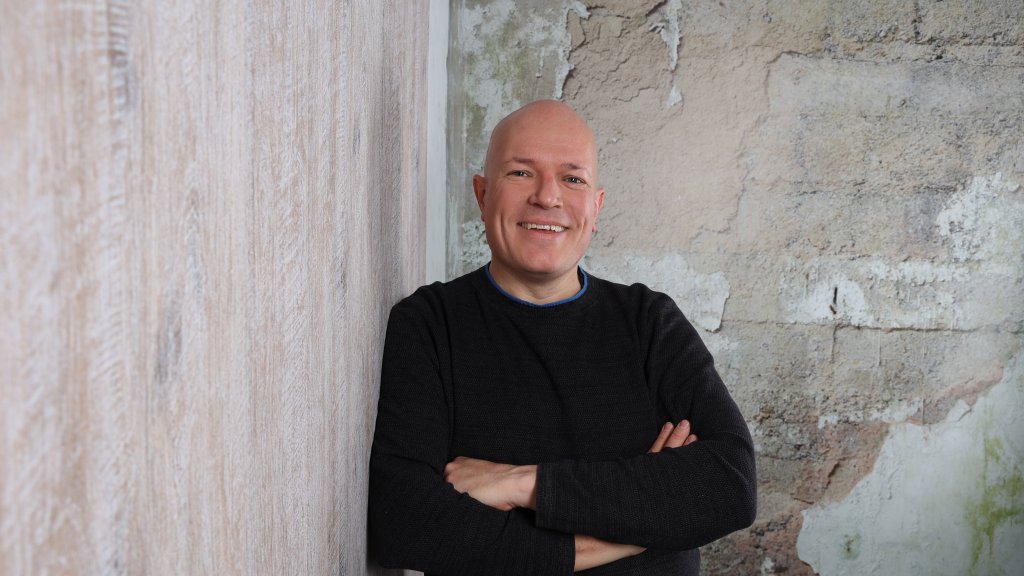
Pastor Malte Stets joined the Evangelisch-Lutherischer Kirchenkreisverband Hamburg this summer. One of his key areas of work is queer-sensitive pastoral care. SCHWULISSIMO wanted to find out more.
Your first World AIDS Day service in Hamburg is approaching. How do you feel as this special day draws near?
I am looking forward to this service, which has a long tradition in St. Georg. There is so much suffering and grief in the room, but also hope and joy at what has been achieved. Together with LAG AIDS, this year we are focusing on the biblical story of a person who was excluded because of their illness. Its central message is: you are not alone. God loves you just as you are.
What personally inspired you to become a pastor?
My path was not entirely straightforward. Although I began studying theology straight after my Abitur school-leaving exams, for a long time I was unsure whether I would become a pastor or an actor. My acting training still shapes my pastoral care today: both are about being truly present and listening. As a teenager, I experienced my congregation as a safe space. That shaped me and my coming out, and that is exactly what I want to pass on.
You are involved in the queer-sensitive pastoral care service “Positiv leben & lieben”. What does this name mean to you?
Our history is visible in this name: ‘positive’ initially refers to people living with HIV. Over time, it became an outlook: living and loving are good things that God wants for us. Queer-sensitive pastoral care has long been available in many congregations too. But people coming for the first time often do not know who will welcome them or what their attitude will be. With us, they know.
“Positiv leben & lieben” has supported people with HIV for more than 30 years. How have their concerns, needs and expectations of the Church changed during that time?
In the early years, the focus was on bereavement support and care for the dying. Today, it is often about community, but also very practical matters: dealing with public authorities, finding somewhere to live, dealing with the Jobcentre. Because queer people still face discrimination today. More than 30 years ago, the Church in Hamburg decided to stand alongside gay men and people with HIV. Today, we are here for all queer people. And those who have been coming to us for 30 years still have a place with us.
For many LGBTQ+ people, the Church was long associated not with safety but with exclusion and rejection. How can it regain the trust it has lost?
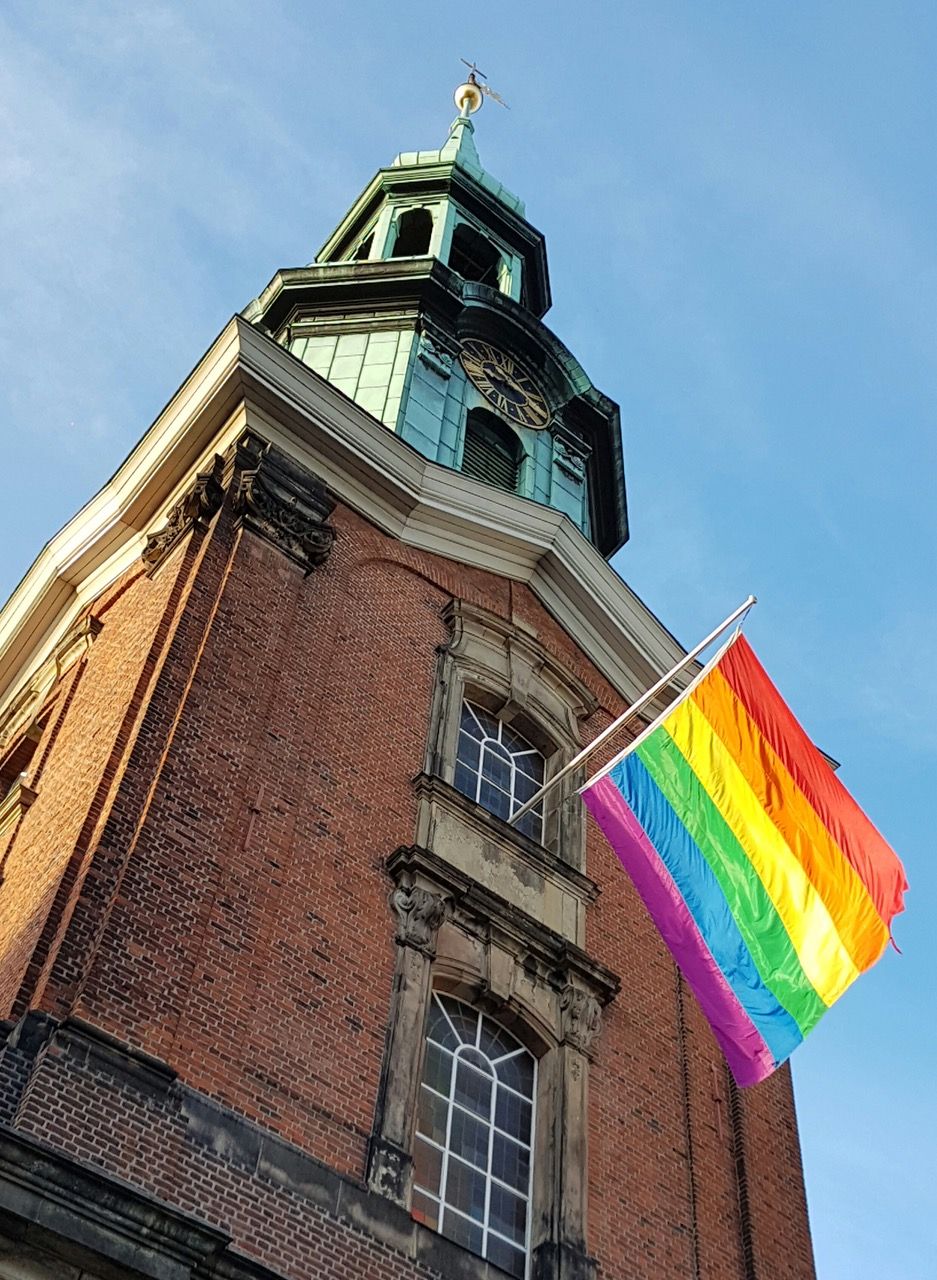
A great deal has already happened. But we have to be honest: for a long time, the Church placed morality above God's love, hurting many people in the process. Even today, there are people in the Church who have a problem with queer people, just as there are throughout society. But the institution has set itself clear ground rules: every person is loved by God, no matter who they are. There is plenty of room under the rainbow, a biblical symbol of God's covenant with humanity. Now we must defend what has been achieved. And in most congregations, trans people still cannot take a warm welcome for granted. We need to tackle that.
AIDS pastoral care is evolving into queer pastoral care. What role do loneliness, stigma and discrimination play in this?
Sadly, stigma and discrimination are still a reality for many people: in their families, at government offices, in hospital. Much has changed, but the uncertainty runs deep. Then there is loneliness: many of those we support who have been living with HIV for a long time lost their circle of friends in the nineties. So AIDS is not disappearing from our work; other issues are being added.
You are part of LAG AIDS Hamburg. How important is cooperation between the Church, HIV support organisations and other civil society organisations?
It is enormously important. During those difficult years, the community showed what is possible when people stand together. The advice services within LAG cover a broad spectrum. As the Church, we contribute a space for questions about grief, remembrance and meaning. We are part of a tradition that can give these profoundly human experiences words, rituals, time and space.
With effective treatment, HIV is now medically manageable. Why, then, does prejudice against people with HIV persist?
Images and feelings are often stronger than facts. Many people are still influenced by the fear of the eighties and nineties. Many do not know that HIV cannot be transmitted when someone is on effective treatment. And HIV is still associated with sexuality and blame. What helps is talking, raising awareness and being visible. And, as the Church, saying clearly: illness is not a punishment.

How do you approach people facing a serious diagnosis, fear of dying or existential crises?
The best thing I can do is listen: see the person, make time and bear the difficult things together. Faith does not have a ready answer for everything; that would be too simple. Sometimes the most honest thing is to lament together. And often there is strength in prayer or a blessing that helps people bear their situation.
“The Church and queer life belong together” is a central message of your work. What do you say to people who still regard homosexuality or trans people as incompatible with the Christian faith?
The Bible tells us that human beings are created in the image of God. For me, male and female are poles, and there is much in between, just as there is twilight between day and night. Anyone who reduces people to those poles also reduces the image of God. If there is an image of queerness, it is God himself, who is diverse and knows life in all its facets. We encounter him in Jesus, who acts against all social expectations and thus shows his love for humanity. I understand the narrow moral statements in certain passages as historical statements from a patriarchal society.
The Kirchenkreisverband Hamburg brings together the resources of two church districts, including in pastoral care. What opportunities does this cooperation offer, and where do you still see gaps in provision?
We see ourselves as a service provider for congregations throughout Hamburg and southern Holstein: a source of ideas and a point of contact, for example when a member of the clergy is asked about a transition ceremony for the first time, or when parents seek advice. One gap I see concerns queer young people. Many of them have suicidal thoughts. They need more places in the Church where they are not left alone with their questions.
Looking five years ahead, what would you like to have achieved through your work in Hamburg?
I want queer people to find queer-sensitive people they can turn to in every Hamburg congregation, without having to search for long. To achieve that, the Church must courageously continue on its chosen path, even as the social climate grows harsher. Our congregations should become genuine safe spaces: for everyone, regardless of what they believe or how they love.
Mr Stets, thank you very much for speaking to us.
World AIDS Day service in St. Georg
Monday, 30 November 2026, 6pm, Dreieinigkeitskirche St. Georg, St. Georgs Kirchhof 19, 20099 Hamburg. Pastor Malte Stets and the team from “positiv leben & lieben” will lead the evening, with the participation of Provost Anne Arnholz.