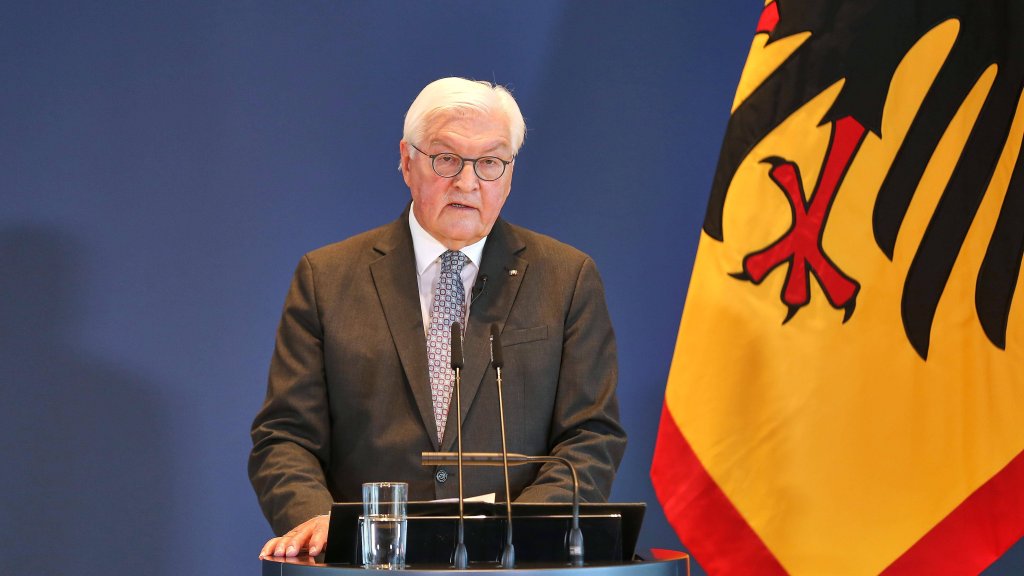
Three weeks after the Islamist attack on Christopher Street Day (German) (CSD) in Berlin’s Tiergarten, German Federal President Frank-Walter Steinmeier has called for solidarity with the victims and the queer community. One woman was killed in the attack on 25 July 2026, and more than thirty people were injured, some seriously.
Key points at a glance
- Three weeks after the Islamist attack on CSD in Berlin’s Tiergarten, Federal President Frank-Walter Steinmeier commemorates the victims.
- One woman was killed, and more than thirty people were injured, some seriously.
- Steinmeier describes the attack as an attack on an open society and on the queer community.
- He emphasises everyone’s right to self-determination and equal rights.
- Among other measures, the Federal President calls for rigorous prosecution, safety in public spaces and protection for civil society.
“We belong together”
Victims were remembered at other Pride events as early as the first weekend after the attack on Berlin’s CSD. Further commemorations and a CSD benefit concert are planned for August and September. Steinmeier said it was important and right that many people across Germany were expressing their sympathy and solidarity. The attack had brought an abrupt end to a celebration at which people from all over the world – queer or not – had come together to celebrate the joy of life and the courage to be free.
“As always after such acts, we struggle to find the right words, the appropriate expression of sympathy, the political response,” Steinmeier said. Far too often in recent years, he had had to ask himself these questions. The wound would not heal quickly, nor could it be made to disappear with hasty political demands. He therefore wanted to reaffirm for Germany: “No victim of threats and violence should stand alone. We belong together, we stand together – in joy, in grief, in solidarity.” This was how the country would fulfil the Basic Law’s mandate to uphold human dignity.
An attack on everyone
The Islamist attack had been “an attack on us all, on our open society”, Steinmeier continued. Under Germany’s constitution and in accordance with its convictions, everyone had the right to self-determination – particularly where the most intimate aspects of each person were concerned: the expression of their own personality, love and relationships, physicality and sexuality. It had taken long enough for this understanding, its acceptance and ultimately the corresponding legislation to become established in the state and society.
“Self-determination, equal rights – these are not matters that concern only minorities. They are our country’s political DNA. And we defend that, including against those who want to impose a rollback towards exclusion and discrimination.” At the same time, Steinmeier made clear that the act, in all its hatred, had been directed first and foremost at gay and lesbian people and the entire queer community. Many of them were now afraid. For some time, they had faced a growing risk of becoming victims of hostile denigration, harassment and criminal offences.
Record number of criminal offences
The number of these offences had risen to a new record high last year (German), Steinmeier said. In previous years, too, CSD parades, particularly in smaller towns and cities, had repeatedly been threatened and attacked. Some events had only been able to go ahead under heavy security or had been cancelled. The perpetrators were Islamists, as in Berlin, “but often, very often, also right-wing extremists who increasingly direct their hatred of an open society against homosexuality and queer people too.”
A democracy prepared to defend itself could not tolerate this. Among the tasks ahead, Steinmeier listed rigorous prosecution, safety in public spaces, protection for civil society, an education drive, solidarity and empathy. “The list of tasks is long; it is an obligation for us all.” In an open society, everyone must be able to follow their own path. “Not only without fear, but also with pride; not only in private, but also in public.” This was the very essence of a free society: “The freedom we want to enjoy ourselves should also be everyone else’s freedom.”








