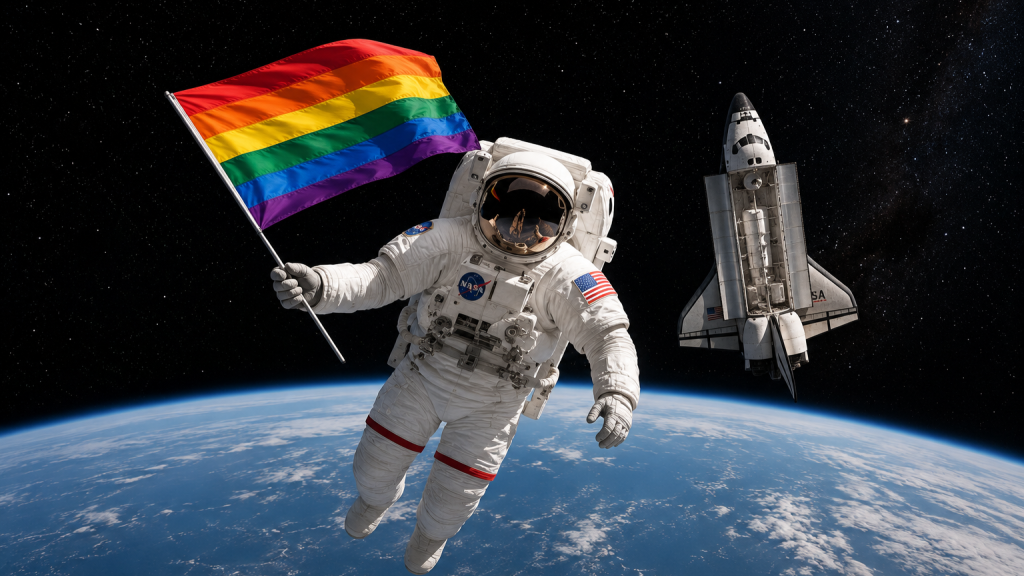
The image of the astronaut as an exceptional individual, almost invulnerable both physically and psychologically, has been part of NASA's self-image since the beginnings of human spaceflight. Scientific expertise, exceptional fitness, resilience and absolute composure were considered essential requirements. But the selection of the first astronauts was not based solely on medical and professional criteria. Social expectations of what an ideal astronaut should be like apparently also played a part. For a long time, one thing was certain: he should not be gay.
The key points at a glance
- During NASA's Mercury, Gemini and Apollo programmes, psychological selection procedures assessed astronauts' heterosexuality.
- The criteria reflected social expectations and prejudices in the US during the Cold War.
- Even in 1994, NASA reportedly still requested that homosexuality be used as a psychiatric ground for disqualifying astronauts.
- The first American woman in space, Sally Ride, kept her long-term relationship with a woman out of the public eye during her time at NASA.
- Her 27-year relationship with Tam O’Shaughnessy only became known after Ride's death in 2012.
- According to The Gay Space Agency project, no openly gay NASA astronaut had flown into space by 2024.
- NASA now presents a much more open image: the agency supports LGBTQ+ initiatives and takes part in Pride Month.
Perfect astronauts – not gay
During the Mercury, Gemini and Apollo programmes, applicants were reportedly subjected to psychological tests intended to assess and demonstrate their supposed “heterosexuality”. Documents relating to this were compiled by photographer Mackenzie Calle for her project The Gay Space Agency and published by World Press Photo, among others. According to these documents, the procedures included the Rorschach test, which involves interpreting inkblots. Recognising shapes that could be associated with female anatomy was to be taken as a sign of heterosexuality. The Edwards Personal Preference Schedule (EPPS) was also used. This psychological test assessed fifteen criteria and explicitly listed “heterosexuality” as a category.
The Cold War and a rigid ideal of masculinity
The selection procedures of the time were shaped by the social climate in the US during the Cold War. Many of the first astronauts came from military aviation or were test pilots. They were expected not only to be technically proficient and physically resilient. The astronaut also embodied a particular public ideal: discipline, reliability, self-control and sheer masculinity. Homosexuality was heavily stigmatised in US institutions at the time. For The Gay Space Agency, Mackenzie Calle examined documents from NASA and the National Archives. One focus of her work is the question of what role gay people played in the history of the American space programme – and why that history remained so poorly documented for so long.
Homosexuality as grounds for disqualification
The debate over homosexuality did not end with the Apollo programme. As late as 1994, during the era of Space Shuttle flights, NASA reportedly requested that homosexuality be included as a psychiatric ground for disqualifying astronauts. This episode was reconstructed by Patricia A. Santy, a psychiatrist and flight surgeon who worked with NASA. In 1994, Santy published the book “Choosing the Right Stuff: The Psychological Selection of Astronauts and Cosmonauts”. Santy was reportedly asked repeatedly to apply homosexuality as a disqualifying criterion. What makes this remarkable is that homosexuality had already been removed from official classifications of mental illness years earlier. Nevertheless, sexual orientation could apparently still enter into considerations when selecting astronauts.
Sally Ride's secret relationship
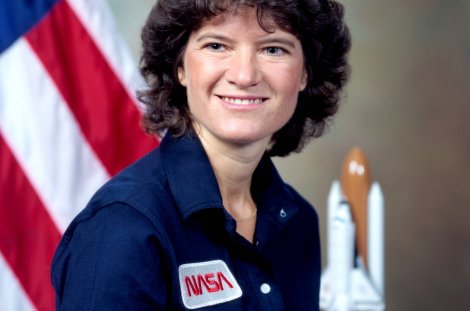
The treatment of gay people becomes particularly clear when looking at Sally Ride's story. On 18 June 1983, Ride flew aboard the Space Shuttle Challenger on mission STS-7, becoming the first American woman in space. During her time at NASA, however, she did not speak publicly about her sexual orientation. Only after her death in 2012 did it become known that she had been in a relationship with Tam O’Shaughnessy for 27 years. Ride is therefore now regarded as the first known LGBTQ+ astronaut to have reached space.
O’Shaughnessy explained that Ride had deliberately decided against coming out publicly during her time at NASA. She had feared that doing so would harm the space agency. According to her partner, “the world was not ready yet”. According to Mackenzie Calle's project, a total of 339 Americans had been trained as NASA astronauts by 2024. None of them, the project states, had completed a spaceflight as an openly gay person.
From exclusion to Pride
NASA's approach to LGBTQ+ people has since changed significantly. The space agency now supports initiatives for the community and promotes internal networks. These include the Out & Allied Employee Resource Group. It is aimed at NASA's LGBTQ+ employees and people who support the community as allies. Individual NASA centres have also addressed discrimination and the experiences of gay and queer employees. In 2021, the Marshall Space Flight Center organised events on discrimination and the particular challenges faced by LGBTQ+ people in the workplace. A particularly visible gesture followed a year later: in 2022, all NASA centres flew the Progress Pride Flag during Pride Month for the first time








