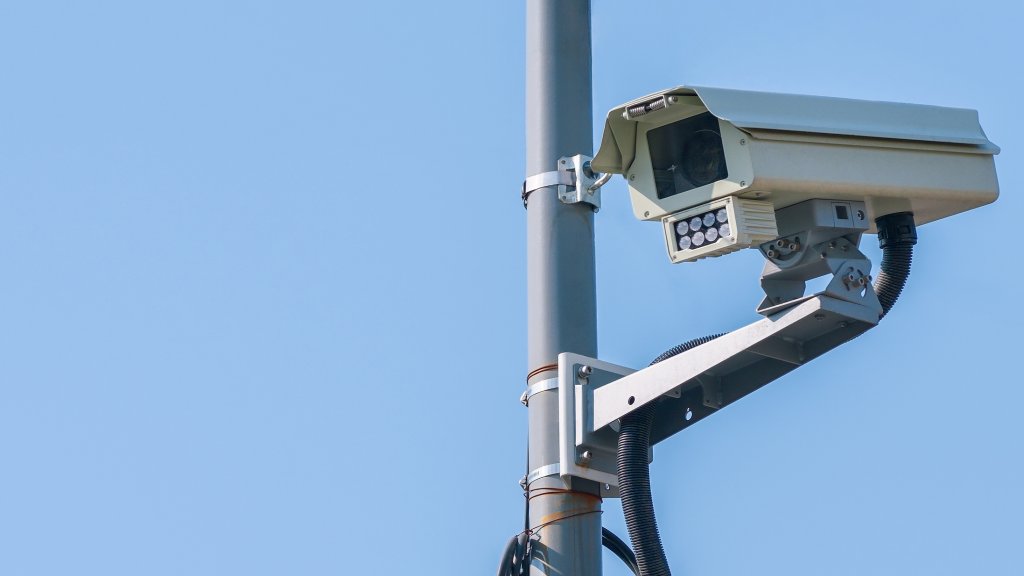
Reactions following the attack on Christopher Street Day in Berlin: the Bavarian state government wants investigating authorities to be allowed to use artificial intelligence (AI) to identify suspects immediately through public surveillance cameras when searching for dangerous offenders. This would involve automatically comparing wanted persons’ photographs with live video footage. Bavaria’s justice minister Josef Schmid (CSU) wants this to enable faster arrests, particularly in cases involving the most serious crimes.
Key points at a glance
- AI-assisted searches: Bavaria is calling for permission to compare images from public surveillance cameras with wanted persons’ photographs in real time.
- Federal-level initiative: the state intends to raise the issue at the Conference of Justice Ministers in Hamburg next week.
- Federal legislation does not go far enough: Bavaria’s justice minister Josef Schmid (CSU) is demanding broader powers than those currently envisaged by the federal government.
- Strict conditions: real-time identification would only be permitted for particularly serious offences, with judicial authorisation and subject to clear limits on time and geographical scope.
Issue for the Conference of Justice Ministers
The state plans to submit a corresponding motion at the Conference of Justice Ministers in Hamburg next week. As the “Münchner Merkur” reported, Schmid is campaigning to allow real-time biometric identification under certain legal conditions. In the minister’s view, swift intervention by the security authorities is crucial, particularly when pursuing especially dangerous offenders. Modern technological capabilities should therefore also be available for searches. To support his argument, Schmid referred to the attack in Berlin. “The horrific attack on Berlin’s Christopher Street Day this year has shown that people rightly expect terrorists to be arrested as quickly as possible. Investigators must therefore not be denied access to modern tools,” the CSU politician said.
Federal government plans data matching
Bavaria’s initiative goes beyond the federal government’s existing plans. The federal government has already presented a bill intended to expand the Code of Criminal Procedure to allow remote biometric matching. However, it provides exclusively for retrospective analysis. Under the draft legislation, investigators dealing with offences of substantial significance would be allowed to compare biometric data from criminal proceedings with publicly accessible images on the internet. This would allow existing images to be used to identify wanted persons.
For Schmid, this provision does not go far enough because it does not permit the immediate analysis of live surveillance camera footage. He sees this as a missed opportunity to speed up searches in cases involving particularly serious offences. “Under the draft, however, matching against publicly accessible real-time data would be prohibited, even though this would be possible under European law,” the Bavarian justice minister criticised. His demand therefore aims to make automated matching against live camera images legally permissible alongside retrospective comparisons of existing footage. This would allow wanted persons to be identified by their biometric characteristics during an ongoing search.
Interference with fundamental rights
The use of such technology raises fundamental questions about data protection and personal freedom. Real-time biometric identification recognises people by their physical characteristics while they are within cameras’ field of view. Such a measure constitutes a significant interference with fundamental rights. Schmid also acknowledges the far-reaching implications of this form of surveillance. He therefore emphasises that his proposal is not intended to enable blanket monitoring of the population.
“I want neither citizens whose lives are completely exposed nor a surveillance state. Our aim is not to monitor people in public spaces. We want to conduct targeted searches for dangerous offenders and take them out of circulation as quickly as possible.” Under the minister’s proposals, the technology would be used exclusively for targeted searches. He says there is no intention to introduce blanket surveillance of public spaces or surveillance without time limits.
Limits on the use of AI
To place legal limits on this interference with fundamental rights, Bavaria wants to make real-time biometric searches subject to four binding conditions. These are intended to ensure that the technology is used only in particularly serious cases and under state oversight. First, every such search would require a judicial order. The police would therefore not be able to initiate automated matching independently without a prior court decision. Its use would also be permitted only for particularly serious offences. Under the Bavarian proposal, real-time biometric identification would not be available for less serious offences.
A further condition concerns the duration and geographical scope of the search. Every measure would have to be limited in both time and geographical scope. This is intended to prevent surveillance, once authorised, from continuing indefinitely or being extended to other areas. Finally, Bavaria is calling for a requirement to specify the precise locations where the technology is used. This would mean setting out in detail the locations at which images from public surveillance cameras could be analysed using artificial intelligence. Through these requirements, Schmid wants to enable the use of modern technology to search for suspects while also establishing legal limits for the security authorities. It currently remains unclear whether the state’s demand will win support and be incorporated into the planned federal legislation.








