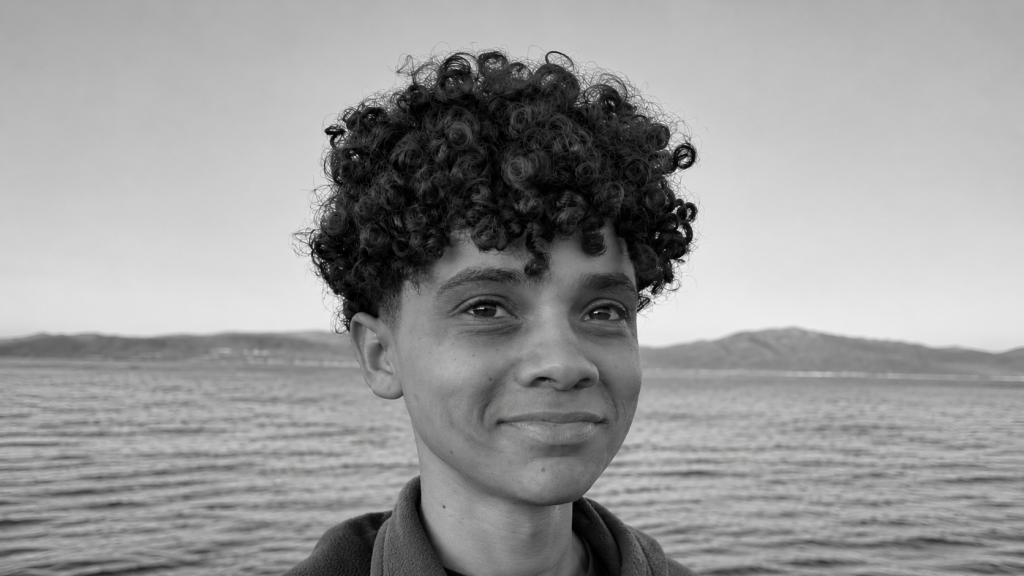
Dutch trans activist and queer human rights defender Jason Bhugwandass has died at the age of 28. A statement he wrote about his death was published on his Instagram account. Bhugwandass was named Amsterdammer of the Year in 2022 and was particularly known for his work against failings in the Dutch youth care system. The queer community and head of state Rob Jetten are mourning the young man.
Key points at a glance
- Dutch trans activist Jason Bhugwandass has died at the age of 28.
- He had several serious illnesses and had recently needed care in a nursing home.
- For around ten years, he campaigned against abuse and failings in secure youth care.
- His research led to an emergency parliamentary debate and the closure of psychiatric facilities.
- Dutch Prime Minister Rob Jetten paid tribute to the activist’s work.
Serious health problems
The activist had lived with severe post-traumatic stress disorder (PTSD) for years. He also had functional neurological disorder (FND) and Lance–Adams syndrome, a rare movement disorder. As a result of his illnesses, Bhugwandass had become unable to walk, experienced severe tics and repeatedly needed emergency medical treatment. He spent the final weeks of his life in a nursing home. No specific cause of death was given. In his statement published on Instagram, Bhugwandass described his health and increasing physical limitations in detail. “Dear friends, neighbours and followers, I have died,” he began his message.
“As you know, I have struggled with severe and complex post-traumatic stress for years. Over the past year, I also became physically ill. My body failed after I published my last report, ‘Died Alone’. In addition to Lance–Adams syndrome and my PTSD, I developed functional neurological disorder (FND). These conditions exacerbated one another, progressed and did not respond to treatment.” Bhugwandass also described the impact of his illnesses on his everyday life and activism: “My fight for better care for young people had become so destructive for me that I could no longer walk, suffered from severe tics and regularly needed emergency medical treatment. In the final weeks of my life, I could no longer manage my daily life independently, so I lived in a nursing home where, incidentally, I was very well cared for.”
Wishes left unfulfilled
In his statement, the 28-year-old also looked back on the personal goals he had been unable to achieve because of his health. “In this life, with these experiences and these illnesses, I could not achieve my goals. Although I am intelligent, I was unable to develop my abilities sufficiently. One day, I wanted to become a lawyer or a judge. In fact, I became nothing at all.” In his message, Bhugwandass also reflected on the health consequences of his years of activism. He described the considerable personal toll of his work and said: “All I can say is that I did my best and look back on a difficult and turbulent life, but I regret nothing.”
The activist also thanked those who had supported him. “In recent weeks, alongside the anger, there was also some room for gratitude towards the people who were there for me. I am aware that, alongside many enemies, I also had many allies. I want to thank you for that.” He addressed a personal request to those around him: “Dear people, look after one another, look after the children (both within and outside the youth care system) and please look after my pigeons too.” Bhugwandass ended with an explicit wish: “I do not want recognition or words of praise from people and institutions that spoke negatively about me, obstructed my work or abandoned their moral principles when it mattered. Please respect that.”
Experiences shaped his activism
For around a decade, Bhugwandass had campaigned against abuse and problematic conditions in secure youth care in the Netherlands. His activism stemmed from his own experiences in such facilities as a teenager. Bhugwandass himself had been placed in a youth care facility because of depression and suicidal thoughts. He later brought the treatment of particularly vulnerable children and young people to public attention. As early as 2019, he described conditions there in an interview with the Dutch news programme “Nieuwsuur”. “You could be put in an isolation room for even the slightest thing,” he said at the time.
Bhugwandass attracted nationwide attention with his investigations into conditions in specialist psychiatric facilities. In his report “Eenzaam Gesloten”, published in 2024, he documented allegations of physical, psychological and sexual abuse. His research also examined the isolation of young people, sometimes for prolonged periods. The publication had far-reaching consequences. An emergency debate was held in the Dutch parliament. Inspections were also ordered. The facilities concerned were ultimately closed. In June 2026, Bhugwandass published a further report, “Died Alone”. It examined what happened to young people after they were discharged from the facilities.
Prime minister deeply shaken
Dutch Prime Minister Rob Jetten, who is gay, expressed deep sorrow at the activist’s death. On X, the prime minister paid tribute to his years of work on behalf of people who had had similar experiences in youth care. “Words fail me. The death of Jason Bhugwandass has shaken me deeply. The way he fought against failings in youth care over the past few years deserves respect and recognition,” Jetten wrote. Through his activism, Bhugwandass had made other people with similar experiences heard. “He gave those who had had similar experiences the voice he himself had so painfully lacked.” The prime minister ended by expressing his sympathy to the activist’s family and companions: “It is incredibly sad that Jason is no longer with us. I wish all his loved ones and everyone who held him dear much strength at this difficult time.”








