A landmark vote on the rights of same-sex couples is approaching in the US state of Virginia. On Tuesday, voters will decide whether to remove a 20-year-old ban on same-sex marriage from the state constitution and replace it with an explicit right to marry.
Key points at a glance
- Referendum on Tuesday: Voters in the US state of Virginia will decide whether to remove the ban on same-sex marriage from the state constitution.
- Governor urges support: Abigail Spanberger is calling for constitutional protection for marriage regardless of sex, gender identity or ethnicity.
- Ban in place since 2006: Around 57 per cent of voters supported a constitutional ban on same-sex marriage at the time. It has been unenforceable since a Supreme Court ruling in 2015.
- Fears of a rollback: LGBTQ+ organisations fear that the Supreme Court could overturn its earlier ruling on marriage equality.
- Potential to set an example: According to the Human Rights Campaign, a vote in favour could make Virginia a model for other US states.
Amending the constitution
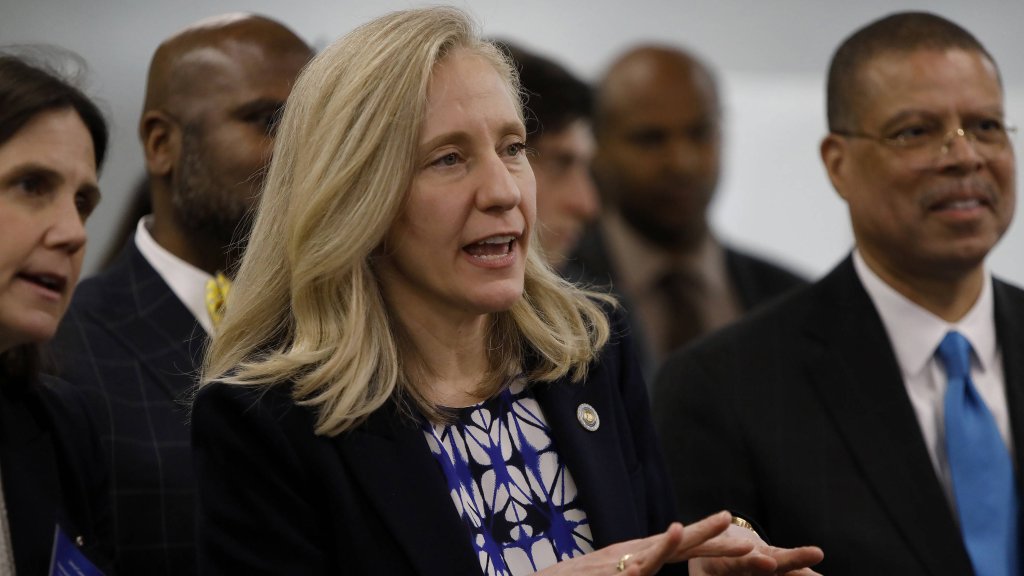
Governor Abigail Spanberger has now urged voters to support the amendment at a campaign event in Richmond. Alongside representatives of the LGBTQ+ organisations Human Rights Campaign and Equality Virginia, she advocated for the constitutional amendment at the long-established lesbian bar Babes of Carytown. “The fact that we still have a ban in our state constitution at this point casts something of a shadow,” Spanberger said. The first female governor in the state's history also stressed: “The fact that our constitution still contains a ban on marriage equality is, to me, an injustice that must be corrected,” she told campaign volunteers. In 2006, Virginia added a ban on same-sex marriage to its constitution with around 57 per cent voting in favour.
Since the 2015 US Supreme Court ruling in Obergefell v. Hodges (German), same-sex couples have been able to marry nationwide. The ruling also made Virginia's constitutional ban unenforceable. However, it was never removed. The proposed amendment would replace the ban with a constitutionally guaranteed right to marry. Existing state law also protects same-sex marriage. However, if the Supreme Court were to overturn its 2015 ruling, the existing constitutional ban could become enforceable again unless it is removed first.
Concerns over the Supreme Court
These fears intensified in 2022, when the Supreme Court overturned the nationwide constitutional right to abortion. In a separate opinion at the time, Justice Clarence Thomas called for other landmark rulings to be reconsidered, including the ruling on marriage equality. Spanberger stressed, however, that removing the ban was necessary regardless of any future court decisions. A vote in favour could reassure people who feared losing their rights again, or who still remembered their fellow citizens voting against their right to marry 20 years ago. “It means a great deal to me personally. It means a great deal to me because I have many friends who are married in the shadow of this ban,” Spanberger said.
Hopes of setting an example
At the event in Richmond, Kelley Robinson, president of the Human Rights Campaign, and Narissa Rahaman, executive director of Equality Virginia, supported the campaign. Robinson recalled marrying her wife in 2020 during the coronavirus pandemic. Concerns about hospital visits, health insurance and parental rights had highlighted the importance of a legally protected marriage at the time. “Marriage should never be about fear. It should always be about love,” she said. She hopes that a successful vote in Virginia could prompt further constitutional amendments in the US. “If we can win here in Virginia, that puts us on the path to overturning the remaining 30 bans on marriage equality that are still in state constitutions across the country,” she explained. “I think this is the beginning of something important.”
Rahaman, who married her wife three years ago and leads the “Virginians for Marriage Equality” campaign, pointed to the long struggle for legal equality. “Our work to protect the freedom to marry in Virginia is not limited to the past six months of this campaign. It has a 20-year history,” she said. Marriage equality, however, was only one part of the broader fight for LGBTQ+ rights. “Marriage equality was never our community's ultimate goal. It was a stop along the way.”
Public support
Since the constitutional referendum in 2006, public opinion on same-sex marriage in the United States has changed considerably. According to polling organisation Gallup, only 42 per cent of Americans supported legal recognition of same-sex marriage in 2006. In May 2026, support stood at 65 per cent (German). However, it had been higher in the intervening years: in both 2022 and 2023, 71 per cent supported marriage equality.
Virginia has already played a central role in American history in securing legal equality for married couples. In Loving v. Virginia in 1967, the Supreme Court ruled that bans on marriages between people of different ethnic backgrounds were unconstitutional. The state has also changed politically in recent years. Spanberger won the gubernatorial election in November 2025 with 57.6 per cent of the vote against Republican Winsome Earle-Sears.








