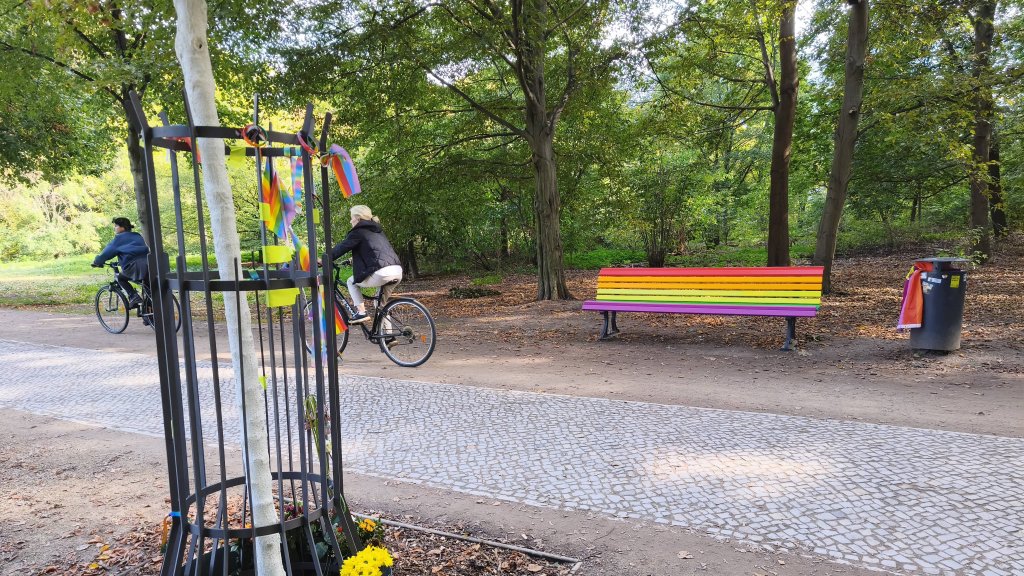
Several times within just a few weeks, the rainbow bench commemorating the attack on Berlin Pride (CSD) has been damaged, painted over or completely vandalised. It is a subject currently prompting much discussion in the community nationwide. SCHWULISSIMO asked Berlin police spokesperson Stefan Petersen-Schümann how the police assess the situation – and why attacks of this kind keep happening.
The key points at a glance
- Four attacks on the memorial: the rainbow bench in Berlin's Tiergarten has been damaged, painted over or vandalised several times since early September 2026. It commemorates the victims of the attack on Berlin Pride in 2026 and takes a stand against anti-LGBTQ+ hostility.
- An 18-year-old under suspicion: according to Berlin police, an 18-year-old suspect has been identified in connection with two of the four offences. Those responsible for the other incidents remain unknown.
- Police step up checks: the rainbow bench is now a regular part of the daily patrols carried out by the local police station, Abschnitt 28. Further protective measures are not being discussed publicly for operational reasons relating to the investigation.
- Fear within the community: following the Pride attack, LGBTQ+ people and business owners reported anger, fear, worry and powerlessness. The repeated damage can reinforce this sense of threat.
- A clear rejection of victim blaming: police spokesperson Stefan Petersen-Schümann rejects claims that the rainbow bench is too provocative. Responsibility lies solely with the perpetrators, not with the LGBTQ+ community.
- A shared responsibility across society: the police stress that law enforcement alone is not enough. Politicians and civil society also have a role to play in tackling anti-LGBTQ+ hostility and deeply rooted prejudices.
Interview with Stefan Petersen-Schümann
What do you know so far about the offences and possible perpetrators or motives?
So far, an 18-year-old suspect has been identified in connection with two of the four offences. Investigations into the other offences currently concern persons unknown.
How do you assess the repeated damage to a place expressly dedicated to remembering the victims of the attack and showing solidarity with the LGBTQ+ community?
Berlin police take repeated damage to a memorial of this kind very seriously. A place that commemorates the victims of the attack on Pride and expresses solidarity with the LGBTQ+ community has particular social and emotional significance. Such criminal damage can therefore affect not only the property itself but also those affected's sense of safety and their confidence that places like this are protected.
Is there any evidence of an anti-LGBTQ+ motive?
Whether the offences were motivated by anti-LGBTQ+ hostility is part of the ongoing investigations. Berlin police are examining all relevant circumstances and evidence to establish the background to the damage.

How can the rainbow bench be better protected in future? Could a stronger police presence or other protective measures, such as CCTV, be considered?
Officers at the responsible police station, Abschnitt 28, are continually briefed to raise their awareness of this issue. The memorial in the Großer Tiergarten is firmly integrated into their daily patrols: they make stops there and regularly patrol the area. Beyond that, I ask for your understanding that no further information about police protective measures can be provided for operational reasons relating to the investigation.
What has been your experience of Berlin's LGBTQ+ community since the attack on Pride? Are you encountering more fear and insecurity?
The account given by Mr Bastian Finke, the former head of the gay anti-violence project Maneo, suggests that parts of the LGBTQ+ community feel less safe. According to his account, many participants used support services and visited counselling centres following the attack on Pride. Business owners from the Regenbogenkiez neighbourhood, among others, shared their impressions following the terrorist attack with the Ansprechpersonen LSBTIQ, the LGBTQ+ liaison officers at Berlin police's Central Prevention Unit, describing feelings of anger, fear, worry and powerlessness. Overall, enquiries from and conversations with individuals indicate a continuing high demand for advice, without any direct connection to the attack. However, these accounts of people's feelings reflect only impressions from certain sections of Berlin's LGBTQ+ community.
What have you experienced in your conversations with those affected? Has LGBTQ+ people's trust in the police changed? According to the study by the EU Agency for Fundamental Rights, 90 per cent of attacks on LGBTQ+ people still go unreported.
LGBTQ+ people's trust in the police is central to our work. Berlin police actively promote a trusting relationship free from discrimination with all sections of the population – particularly LGBTQ+ communities. Victims' willingness to report offences to the police is essential to gaining a clearer picture of the data. This willingness can be influenced by negative experiences with state authorities, a lack of trust in investigative work and feelings of shame. Through consistent prevention work in the LGBTQ+ field over many years, Berlin police seek to address and reduce reservations about trusting the police within these communities. There are no specific incidents or indications suggesting a loss of trust in the Ansprechpersonen LSBTIQ.
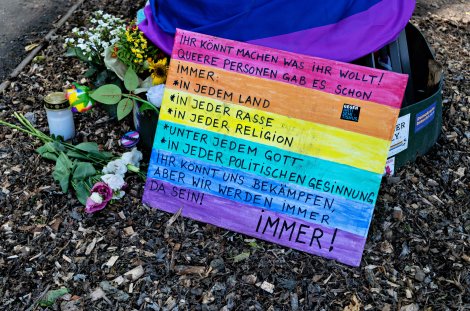
When a memorial is repeatedly vandalised within a short period, what message can that send to LGBTQ+ people – and what practical steps can the police, politicians and the city's wider community take to ensure that a lasting sense of threat does not remain after the attack?
The “rainbow bench”, installed as a park bench in early August 2026, serves not only as a memorial to the victims of the attack on Christopher Street Day 2026 in Berlin, but also as a broader statement against anti-LGBTQ+ hostility. The criminal damage committed there since early September can leave LGBTQ+ people – particularly those affected by anti-LGBTQ+ hostility or their relatives – feeling insecure, afraid and insufficiently protected in their safety and visibility, while conveying a message of intimidation and rejection. Such offences can undermine confidence in social cohesion and protection by the state. Berlin police are doing everything they can to solve and prevent such crimes. They also advise the responsible borough on preventing vandalism. Police action always reaches its limits when it comes to societal and structural challenges. Hate crime and targeted attacks on memorials are not merely isolated acts, but often reflect deeply rooted prejudices. The police alone cannot dismantle prejudices or create a culture of solidarity. Taking a clear stand against anti-LGBTQ+ hostility requires politicians and all parts of civil society to share responsibility.
Alongside widespread disbelief on social networks such as X and Instagram, there are also repeated comments suggesting that a rainbow bench is simply “too provocative” and therefore becomes a target for vandalism. To put it bluntly and somewhat starkly: the community is partly “to blame”. What is your assessment of that?
Such statements are not only wrong but dangerous – because they reverse cause and effect. A memorial such as the rainbow bench in the Großer Tiergarten stands for solidarity, visibility and resistance to anti-LGBTQ+ hostility. The fact that it becomes a target for vandalism is not a sign of provocation, but of hatred and intolerance. LGBTQ+ people have the right to be visible without having to expect attacks as a result. Responsibility for violence always lies with the perpetrators – not with those standing up for their rights and their safety. Berlin police condemn such offences and pursue investigations rigorously. At the same time, it is important that we as a society take a clear stand: against anti-LGBTQ+ hostility – and against every form of victim blaming.
Thank you for speaking to us.








