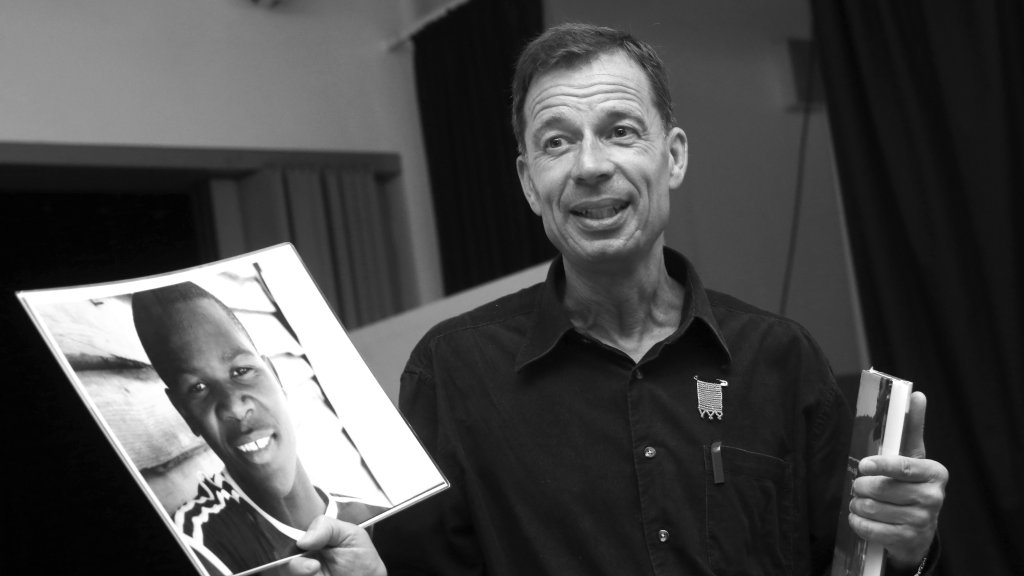
The gay writer, educator and human rights activist Lutz van Dijk has died. Born in Berlin, he died yesterday, Tuesday evening, aged 71 at his flat in Amsterdam. His husband Perry Tsang informed numerous friends, acquaintances and fellow campaigners of his death that same evening. The message included a personal farewell letter that van Dijk had written himself before his life ended.
Key points at a glance
- Death in Amsterdam: The writer Lutz van Dijk died on 17 November 2026, aged 71, at his home in the Netherlands.
- A self-determined end to life: Because of his advancing Parkinson’s disease, he chose legally regulated assisted dying after seeking medical advice.
- Commitment to South Africa: Together with his husband Perry Tsang, he founded the HOKISA aid project for HIV-positive children and young people in 2002.
- More than 50 publications: Van Dijk wrote young adult novels, autobiographical works and books about the Nazi persecution of gay men and lesbians.
- Remembering Nazi victims: He successfully campaigned for the Bundestag to commemorate specifically, for the first time in 2023, homosexual people persecuted under National Socialism.
Severe Parkinson’s disease
The author had Parkinson’s disease and had decided on assisted dying in the face of increasing limitations on his health. In the Netherlands, this is permitted under strict legal conditions. Van Dijk reached his decision after discussions with his husband and the GP treating him. In his final message, he explained his reasons for the decision. “After careful consideration with our GP and my husband Perry, I have decided to bring my life to a gentle end,” he wrote. Neurological changes in particular had increasingly affected his quality of life. Alongside physical symptoms, he had experienced limitations in his thinking and emotional life. The writer described the consequences in these words: “So I began to lose my bearings and had terrible nightmares every night.”
Thanks to companions and partner
During the first six months of 2026, van Dijk had still been able to attend public events and readings. After that, he said, his Parkinson’s disease progressed significantly faster. He was also burdened by complications from kidney stones, which further worsened his health. In his farewell letter, the writer paid particular tribute to his husband’s support. Perry Tsang had been “by my side day and night with boundless love and care”. Over many years, the couple had shared not only their private lives but also numerous social projects. No traditional funeral is planned. Van Dijk had stipulated that his body should be donated to medical science after his death. He ended his letter with a personal expression of thanks to the people who had accompanied him through life: “I am very grateful to have met you in my life. I wanted to write this myself.”
A lifelong commitment
Lutz van Dijk was born in West Berlin in 1955. His parents’ silence about the Nazi era troubled him from an early age and later influenced his engagement with German history and social responsibility. In 1974, he left Germany at the age of 18 and travelled to the United States. There he gained experience in various jobs, including working as a bus driver. After returning, he began studying education in Hamburg. He subsequently taught at a primary school and later worked with children considered particularly difficult. He was also open about his homosexuality at work and came out to his colleagues. Alongside his work in education, van Dijk became involved in various social movements. He was active in Hamburg’s gay rights movement, took part in trade union work and supported the human rights organisation Amnesty International. He was also involved in the peace movement. Another professional and personal change followed in 1992. Van Dijk moved to the Anne Frank House in Amsterdam and later became a Dutch citizen.
Helping children in South Africa
The writer devoted a significant part of his life to supporting disadvantaged children and young people in South Africa. In 2002, together with Perry Tsang, he founded the organisation HOKISA, short for Homes for Kids in South Africa, in a township near Cape Town. The project focuses particularly on HIV-positive children and young people, providing support and a family environment. Over more than two decades, South Africa became a central part of van Dijk’s life. In this context, he repeatedly quoted a line from the Talmud: “Whoever saves one person saves the world.” His connection with the children and young people continued until the end. Van Dijk spent Christmas 2025 with the children’s home family in Cape Town. He also attached to his farewell letter a photograph of himself with his husband Perry and the two street dogs Pablo and Tessi. The picture had been taken in the couple’s garden in Cape Town.
Campaigning for gay people
Alongside his social and political commitment, van Dijk left behind an extensive body of literary work. Over his lifetime, he published more than 50 books. These included young adult novels, autobiographical accounts and non-fiction books in which he addressed, among other subjects, the persecution of homosexual people under National Socialism. He received several awards for his writing. Beyond literature, van Dijk became known throughout Germany for his campaign for greater recognition of the homosexual victims of National Socialism. His efforts were successful: in 2023, the Bundestag commemorated victims from the community for the first time.
Where to find help
Reporting on suicide is an extremely sensitive matter. We do NOT wish to glorify or romanticise it in any way. Many people who die by suicide have a mental illness. If you are struggling or thinking about taking your own life, try to talk to other people about it. They could be friends or relatives. There are also many support services you can contact. Telefonseelsorge is anonymous, free of charge and available around the clock. The telephone numbers are 0800/111 0 111 and 0800/111 0 222. The Coming Out Day association also offers counselling via messenger, email and video chat at www.coming-out-day.de and www.comingoutundso.de to support you. Telefonseelsorge also offers a support chat service. Email counselling is available too. You can register on the website, again anonymously and free of charge. You can find information at: www.telefonseelsorge.de








