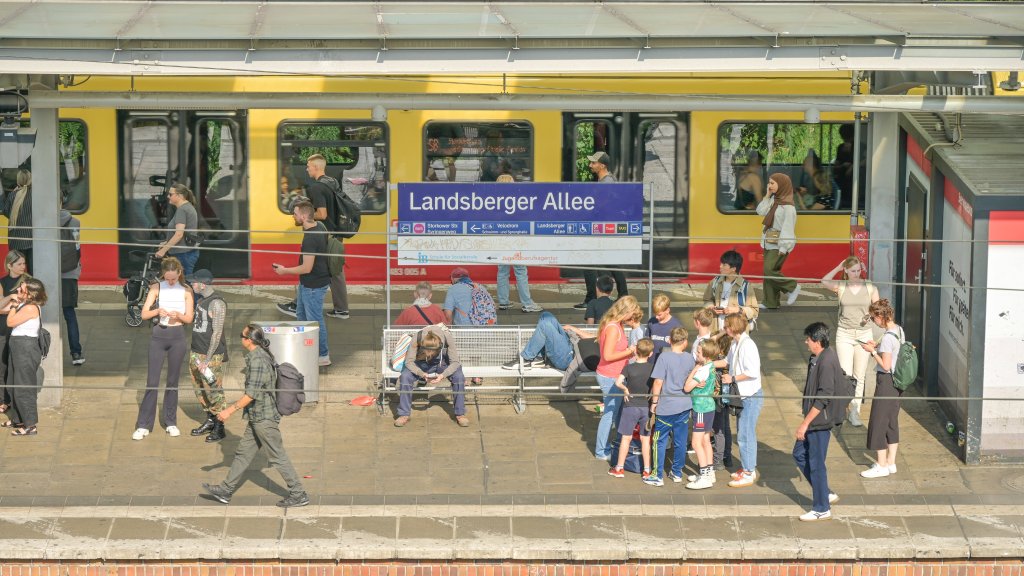
A 26-year-old man has been the victim of a homophobic attack in Berlin. According to Berlin police, the incident took place at around 11:45pm on Wednesday night at the entrance to Landsberger Allee S-Bahn station in the Prenzlauer Berg district.
Key points at a glance
- A 26-year-old was attacked at Berlin’s Landsberger Allee S-Bahn station overnight on Wednesday.
- According to the man’s account, a stranger allegedly first asked him for a cigarette and then about his sexual orientation.
- The 26-year-old was punched, knocked to the ground and partially stripped by further suspects.
- The group allegedly took valuables from the man before fleeing.
- The state security division of the Landeskriminalamt is investigating a possible homophobic motive.
Question about sexual orientation
According to the victim’s account, a man he did not know initially approached him and asked for a cigarette. The stranger then allegedly asked the 26-year-old about his sexual orientation. The gay man answered the question. Immediately afterwards, the stranger allegedly punched the 26-year-old directly in the face without warning. The blow knocked him to the ground. According to the police’s findings so far, further suspects then joined in. Those who joined allegedly partially stripped the man as he lay on the ground. They are also alleged to have taken valuables from him. The group then left the scene and fled. The 26-year-old sustained facial injuries in the attack. Emergency responders treated him before taking him to hospital, where he was admitted as an inpatient.
Investigation into homophobic attack
As investigators believe the attack was very likely motivated by homophobia, the case was passed to the state security division of Berlin’s Landeskriminalamt. Further investigations are under way there. Members of sexual minorities who become victims of hate crime in Berlin have several ways to report an incident to the police. These include filing a report online through Berlin police’s online reporting portal. Berlin police also have two LGBTQ+ liaison officers. This service is intended in particular to make it easier for people from sexual minorities to contact the police. This reflects the fact that some victims’ own experiences have left them distrustful of the security authorities, which can make them reluctant to report an attack.








