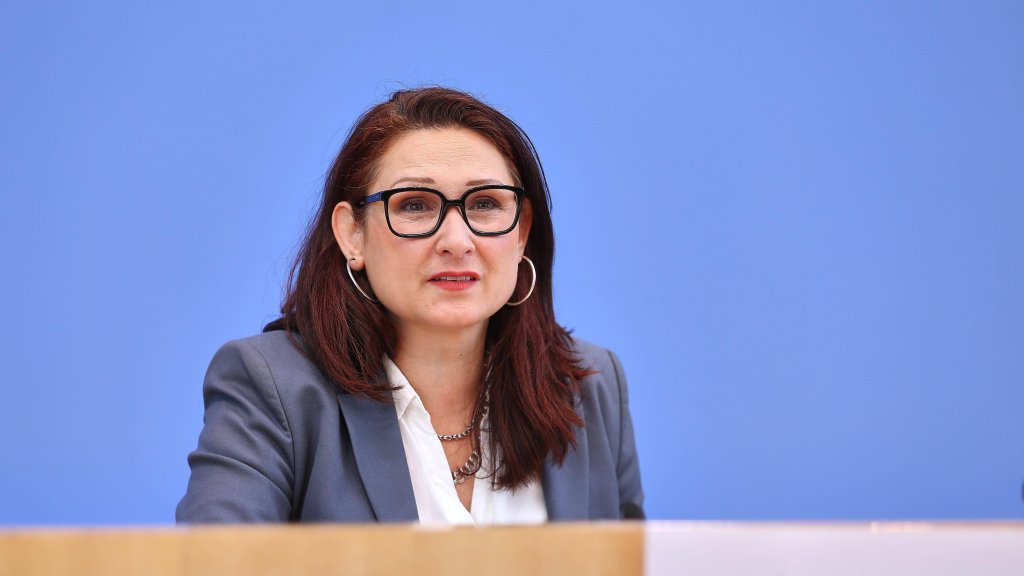
Germany’s Independent Federal Anti-Discrimination Commissioner, Ferda Ataman, wants the Bundestag to decide on an amendment to the Basic Law to protect queer people. The debate recently regained momentum. She is calling for MPs to be given the opportunity to vote on a proposal to this effect.
Key points at a glance
- Anti-Discrimination Commissioner Ferda Ataman is calling for a Bundestag vote on stronger constitutional protection for queer people.
- She believes a two-thirds majority is possible in a free vote.
- CDU/CSU parliamentary group leader Thorsten Frei opposes adding sexual identity to the grounds covered by the ban on discrimination.
- The Bundesrat had already set a corresponding amendment to Article 3 in motion in September 2025.
- Amending the Basic Law requires a two-thirds majority in both the Bundestag and the Bundesrat.
A free vote
“Queer people are the only group who were systematically murdered under National Socialism and yet still have no protection in the constitution,” Ataman told newspapers belonging to Funke Mediengruppe. Calls for explicit protection for queer people in the Basic Law have been made for around 30 years. The debate received renewed attention following the attack at Berlin’s Christopher Street Day (German). Ataman expressed confidence that a corresponding constitutional amendment could secure a majority in the Bundestag: “I am convinced that, in a free vote, a two-thirds majority of members of the German Bundestag would vote unequivocally to protect the gender and sexual diversity of people in Germany,” Ataman said.
Further LGBTQ+ demands
According to the Anti-Discrimination Commissioner, numerous enquiries to the Federal Anti-Discrimination Agency show how widespread discrimination based on sexual or gender identity is. People continue to face considerable discrimination in everyday life, she said. Ataman links her call for an amendment to the Basic Law with further political expectations. She said the federal government must revive the action plan for queer life, which the Federal Ministry for Family Affairs shelved at the beginning of the year (German). Following the attack at Berlin’s Christopher Street Day, in which a woman died, she also demanded concrete measures rather than mere expressions of solidarity. Those affected deserved “more than just lip service”.
Frei rejects amendment
Ataman’s remarks were also a response to the new chair of the CDU/CSU parliamentary group, Thorsten Frei (CDU). He had recently spoken out against extending the Basic Law’s ban on discrimination to include the term “sexual identity”. Frei said he could understand that the queer community wanted this step to be seen as a signal. In his view, however, such an amendment was not necessary. “That would overload our constitution,” Frei said.
The CDU politician also took a position on another demand associated with Christopher Street Day. This concerned flying the rainbow flag on the Reichstag building (German) for the next Christopher Street Day in 2027. Frei noted that the decision rested with the President of the Bundestag, but also made his personal position clear: “The President of the Bundestag makes the decision. But my opinion is that flags promoting a cause do not belong on the Reichstag.”
Bundesrat has approved amendment
Following the attack, calls to adjust constitutional protection had also resurfaced within the SPD (German). The focus is on Article 3 of the Basic Law. An amendment to include “sexual identity” is already the subject of a legislative process. In September 2025, a majority in the Bundesrat voted in favour of extending Article 3 accordingly, on the initiative of the state of Berlin. The legislative proposal was subsequently introduced in the Bundestag. Particularly stringent requirements apply to amendments to the Basic Law: a two-thirds majority is required in both the Bundestag and the Bundesrat. Ataman is therefore pinning her hopes on a vote in which MPs could decide independently of instructions from their parliamentary groups. Without votes from the CDU/CSU, the proposal would once again be doomed from the outset.








