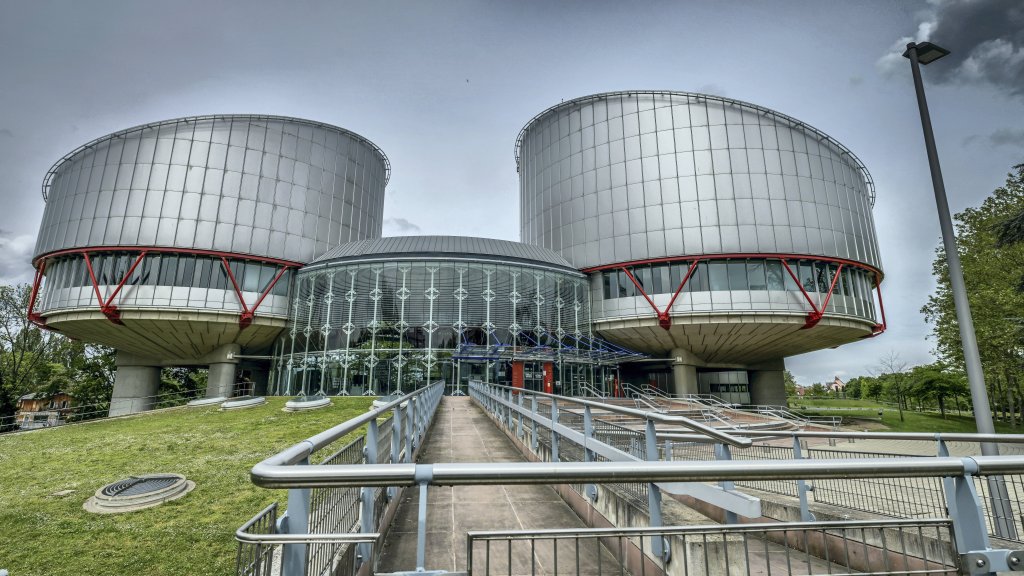
Almost 14 years after a demonstration for LGBTQ+ rights in Ukraine was forcibly broken up, the European Court of Human Rights (ECtHR) has now ruled partly in favour of the activists concerned. The judges found that the Ukrainian authorities had violated the European Convention on Human Rights during a police operation in December 2012. Three applicants will now receive financial compensation.
Key points at a glance
- Ruling after 14 years: The European Court of Human Rights (ECtHR) has found that Ukraine violated human rights when it broke up an LGBTQ+ demonstration in December 2012.
- Compensation for three activists: Olena Shevchenko will receive €3,000, while Bohdan Karpus and Tymur Lysenko will each receive €5,000. Two other applicants will receive nothing on procedural grounds.
- Protest against discriminatory legislation: The demonstration opposed a proposed ban on so-called “LGBTQ+ propaganda”. The legislation was ultimately not passed.
- New human rights strategy: In October, President Wolodymyr Selenskyj signed a strategy that explicitly recognises LGBTQ+ people as a particularly vulnerable population group for the first time.
Activists awarded compensation
The ruling concerns a protest against a bill proposed at the time that sought to ban so-called “LGBTQ+ propaganda” in Ukraine. Police broke up the rally and took several participants to a police station, even though demonstrators had previously been attacked with irritant spray. The Court found violations of Articles 5 and 11 of the European Convention on Human Rights. These protect the right to liberty and security and the right to freedom of assembly. In the case of “Shevchenko and Others v. Ukraine”, the ECtHR examined applications from five people who had taken part in the demonstration.
The Court recognised that the rights of three of them had been violated. Activist Olena Shevchenko will receive €3,000 in compensation for the unlawful termination of the protest. Bohdan Karpus and Tymur Lysenko were each awarded €5,000. Both had also been unlawfully detained by police after the demonstration was broken up. The other two applicants, Y.K. and Sergiy Anatoliyovych Movchan, will receive no compensation. On procedural grounds, they were not recognised as “victims” within the meaning of the Convention on Human Rights. All five applicants had originally sought €20,000 each in compensation for non-pecuniary damage. The Ukrainian authorities must pay the compensation awarded within three months.
Proposed ban on LGBTQ+
The legal dispute stemmed from events in early December 2012. Ukrainian LGBTQ+ activists had gathered on Shevchenko Boulevard to protest against a controversial bill. The proposed legislation provided for a ban on so-called “LGBTQ+ propaganda”. The Ukrainian parliament had already passed the bill at its first reading a month earlier. The rally had originally been planned for Independence Square and along Khreshchatyk Street. However, the authorities banned the event the day before it was due to take place. The activists then gathered on Shevchenko Boulevard. According to the news website “Parni+”, police surrounded the demonstrators, effectively bringing the rally to an end. During the operation, two provocateurs managed to break through the police cordon. They attacked participants in the demonstration with irritant spray. Rather than arresting the attackers, however, police took five demonstrators to a police station.
Unlawful police action
Following the incident, the five people concerned took legal action against the police. Olena Shevchenko, Bohdan Karpus and Tymur Lysenko eventually secured a ruling from Ukrainian courts that the police officers’ actions had been unlawful. However, the domestic courts refused to award them financial compensation. The activists therefore turned to the European Court of Human Rights. In its ruling, the Strasbourg court not only found that protected rights had been violated, but also awarded financial compensation to three of those affected. The judgment underlines the obligation of state authorities to respect freedom of assembly and protect people from unjustified interference with their personal liberty.
New strategy adopted
The bill against which the activists had protested in December 2012 ultimately did not become law in Ukraine. Following a change of government, the newly constituted parliament did not consider the proposal further. The plans were eventually abandoned. In October 2026, Ukrainian President Wolodymyr Selenskyj signed a new National Human Rights Strategy. The new strategy replaces the previous version from March 2021. While LGBTQ+ people were not explicitly mentioned in the previous strategy, the new document includes them for the first time among the population groups at particularly high risk of human rights violations. This marks the first time the Ukrainian government has explicitly recognised LGBTQ+ people’s particular need for protection in its national human rights strategy. Its stated aims include combating discrimination, hate speech and crimes motivated by intolerance. Respect for the rights of LGBTQ+ people is also identified as a distinct concern. The Ukrainian government has six months to adopt a corresponding action plan for 2027 to 2029.








