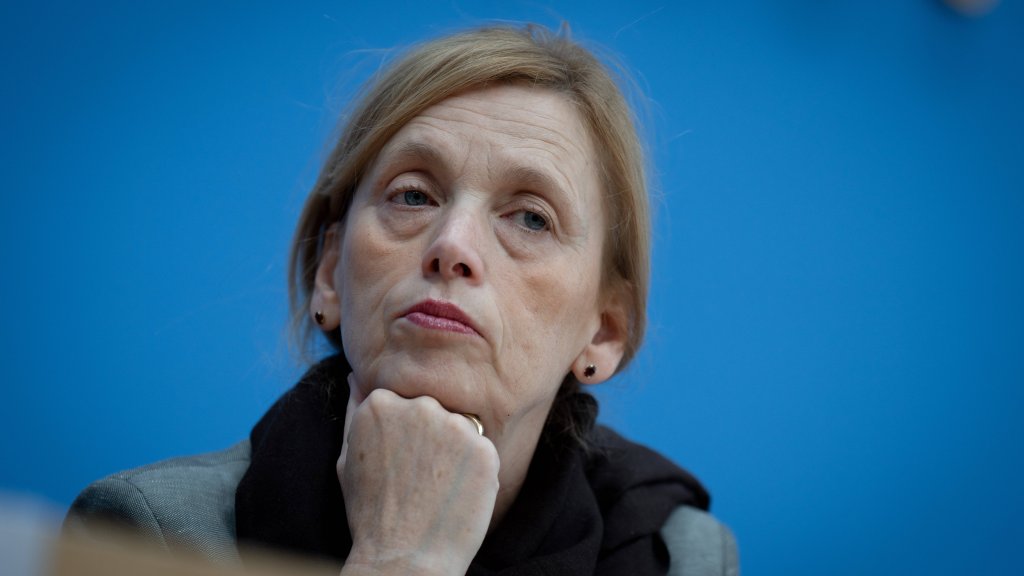
Germany’s Federal Minister for Family Affairs Karin Prien (CDU) intends to press ahead with German social media restrictions for children and young people despite opposition from the European Commission. While the federal government wants to better protect young people from the risks of digital platforms, LGBTQ+ organisations warn of the consequences of blanket bans. For gay and queer young people in particular, social networks can offer important sources of information, places to turn for support and opportunities to connect with others. A sweeping exclusion could therefore hit precisely those who receive little support offline.
The key points at a glance
- Prien stands by German rules: Federal Minister for Family Affairs Karin Prien (CDU) wants to press ahead with national social media restrictions for children and young people despite objections from the European Commission.
- Criticism from LGBTQ+ organisations: The youth network Lambda rejects blanket bans. It says digital spaces are particularly important for young people who find little support in their immediate surroundings.
- Risk of social isolation: A sweeping ban could make it harder for gay and other LGBTQ+ young people to access advice services, information and peers.
- EU plans age limits: Under-13s would not be allowed access to social networks. Accounts of their own would only be permitted from the age of 15.
- Greater obligations for platforms: Prien is calling for restrictions on personalised recommendation algorithms and effective fines for providers.
Focus on LGBTQ+ young people
The nationwide queer youth network Lambda explicitly rejects a general social media ban for minors and has repeatedly stressed recently that a blanket ban is the wrong political approach. It says this ignores the realities of young people’s lives, particularly those of LGBTQ+ young people, and solves none of the underlying problems. Digital services can be particularly important for gay, bisexual and queer young people. Not all young people have someone in their family, at school or in their immediate social circle with whom they can speak openly about their sexual orientation or gender identity. Social networks enable them to meet peers with similar experiences, obtain information and find advice services.
Particularly in rural areas or environments where homosexuality or gender diversity meet with rejection, online contacts can be an important addition to in-person encounters. A blanket ban could make such connections harder and reinforce the feeling of being alone with one’s questions and experiences. Access to information about coming out, support services for those facing discrimination or specialist youth groups could also be restricted. This is not about playing down the potential dangers of social networks. LGBTQ+ young people can also encounter hatred, insults, sexual harassment or problematic content there. However, critics of blanket bans argue that complete exclusion fails to distinguish between harmful platform features and helpful digital services.
Criticism of blanket bans
Alongside the youth network Lambda, children’s rights organisations, youth representatives and the Deutscher Lehrerverband have also criticised general age-based bans. Among other things, they warn that restrictions could undermine young people’s freedom of information and participation in society. Particularly vulnerable young people could become further isolated as a result. The Deutscher Lehrerverband considers a statutory age limit for social media “neither realistically enforceable nor sensible”. Its president Stefan Düll argues that children and young people need to learn to use digital services safely and responsibly. Rather than denying them access altogether, he says, media literacy must be strengthened. For LGBTQ+ young people, there is also the question of how advice centres, self-help groups and youth organisations will be able to reach their target groups in future. If social networks are blocked entirely for certain age groups, accessible ways of making contact could also be lost. However, the actual consequences will depend on the precise form of the rules and any exemptions.
Prien ignores EU concerns
Despite the criticism, Federal Minister for Family Affairs Prien wants to press ahead with the planned German restrictions. Ahead of a ministerial meeting in Brussels, the CDU politician said: “Germany has a strong interest in reaching a common European solution here, but we can no longer tolerate children and young people being left unprotected.” Work on a national interim solution would therefore continue. The European Commission recently put the brakes on Austria and other member states introducing their own social media bans. National bills that overlap with the planned European age limits are to be postponed for a year initially. Brussels wants to prevent different rules from emerging within the European Union. A Commission spokesperson reiterated that the delay was intended to ensure member states participated fully in the European negotiations. When journalists pointed out that Brussels did not want national interim solutions, Prien replied that the decisive factor would be how the Commission used the instruments available to it for such situations.
Social media only from age 13
In substance, the federal government’s and the European Commission’s proposals are closely aligned. The Commission recently proposed the so-called EU Kids Act. Under this proposal, children under 13 would generally not be allowed access to social networks. Restricted accounts managed by parents or guardians are envisaged for 13- and 14-year-olds. An account of their own would only be allowed from the age of 15. The restricted accounts would be subject to measures including a time limit of one hour a day. Features that encourage excessive use would also be regulated more strictly. These include infinite scrolling, certain notifications and personalised recommendations.
The federal government also wants to make platforms such as TikTok, Snapchat and Instagram generally inaccessible to children under 13. Exemptions would apply to services demonstrably suitable for children. Graduated restrictions are planned for young people aged between 13 and 18. The federal cabinet adopted the relevant key points in October for a German interim arrangement. The plans include reform of the Youth Protection Act. Implementation at both national and European level is likely to take several more months.
Prien calls for stricter rules
During the negotiations in Brussels, Prien also wants to ensure that personalised recommendation algorithms are generally unavailable to children and young people. Such systems analyse previous user behaviour and suggest further content on that basis. They are a central feature of many social networks and can contribute to users spending more and more time on the platforms. Prien stressed that responsibility for protecting minors must not rest solely with parents. Instead, platform operators must face greater obligations to make their services safe. Violations would require fines “that can really have an impact”. At the same time, the minister pointed to the opportunities offered by digital technologies. “The digital world offers children and young people enormous opportunities, but also poses considerable risks. We want to empower young people to make independent use of the opportunities offered by digital transformation while protecting them from its dangers. Protection, empowerment and participation are inseparable.”
This requires a common European approach, she said. “With the EU Kids Act, we now have the opportunity to protect children and young people in all EU member states through common rules,” Prien explained. She welcomed the fact that the European Commission’s proposals were aligned with Germany’s plans in key respects: “We consider the approach of making social networks accessible only to children aged 13 and over to be an essential part of the EU Kids Act, on which we are leading intensive negotiations in Brussels,” the minister said.
Media literacy and participation
Alongside the planned social media restrictions, this week’s meeting of EU education and youth ministers also focused on artificial intelligence (AI), digital skills and the challenges of technological change. Germany is advocating better preparation for pupils and teachers to meet the demands of an increasingly digitalised society. This includes skills in using AI and stronger support for the so-called STEM subjects: science, technology, engineering and mathematics.
The meeting of youth ministers also addressed how to navigate a changing information environment, recognise disinformation and promote youth spaces in Europe. Young people should learn to assess information critically and navigate digital spaces independently – an important issue, particularly in countering online fake news and hate campaigns against LGBTQ+ people. “No one must be put at risk in the digital world, and no one must be left behind,” Prien said. To achieve this, digital skills must be strengthened from an early age and throughout education, so that “the youngest members of our society in particular can navigate the digital world safely and independently.”








