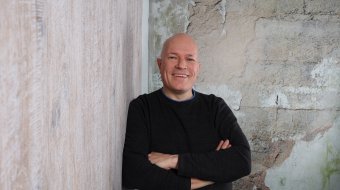
The election to Berlin’s House of Representatives on 20 September is considered wide open following the withdrawal of Governing Mayor Kai Wegner (CDU) and the fatal vehicle attack at Berlin Pride (CSD). A possible change of government could also affect the rainbow capital’s LGBTQ+ policies – including anti-discrimination measures, educational projects and funding for queer organisations and facilities. SCHWULISSIMO spoke to Florian Winkler-Schwarz, managing director of LSVD+ Berlin-Brandenburg.
How satisfied is LSVD+ with the work of the CDU–SPD government under Kai Wegner?
Berlin has taken steps in recent years to support queer life. That is important and deserves recognition. Nevertheless, these steps are not enough – the recent attack during CSD has demonstrated that to us in the most horrific way. We are experiencing a massive increase in anti-queer violence and a social backlash that is leaving many people feeling insecure. Especially at times like these, we need policies that take a clear stand and consistently put the protection of minorities centre stage. Our assessment is therefore mixed: we face enormous challenges that require much more decisive political action.
According to the latest polls, the CDU and SPD may no longer have enough support to govern together. Is Berlin facing political chaos, particularly with the AfD gaining strength?
Voters will decide which government Berlin has in future. As LSVD Berlin-Brandenburg, we are not currently assessing possible coalitions. Instead, we refer people to our election questionnaire to find out about the parties’ plans on queer issues. However, we are concerned to see anti-democratic and anti-queer positions once again becoming more vocal in society. When minorities’ fundamental and human rights are called into question, that affects not only queer people but our democracy as a whole. We therefore expect all democratic parties not to make the protection of queer people a political bargaining chip.
In your view, which three issues for queer people should be at the top of the agenda in Berlin’s election campaign?
First: safety. No one should have to fear being insulted or attacked because of their sexual orientation or gender identity – whether on the street or online. This is where action is needed most urgently. That is why we are also explicitly calling for Berlin’s law on support for victims of violence to be extended to protect queer people too. Second: strong queer services and infrastructure. Advice centres, youth services and projects for older people, rainbow families or people with refugee backgrounds need reliable funding, not cuts. Third: education and prevention. Democracy, diversity and education on queer issues must remain an integral part of schooling.
Berlin is the self-proclaimed rainbow capital. Is that reputation justified in light of rising hate crime and attacks such as the recent one at CSD?
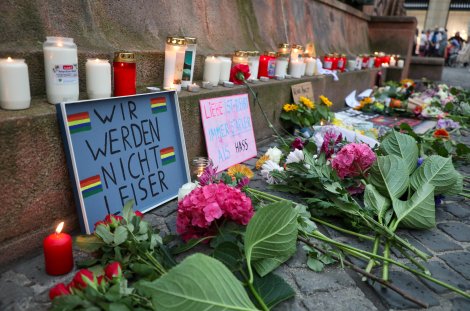
For many queer people, Berlin is still a place of freedom and visibility. At the same time, we are seeing developments that contradict this claim – most recently the horror of the attack on our community during Berlin CSD. The number of anti-queer offences has been rising for years. Many people tell us that they avoid certain places, refrain from showing affection in public or make themselves less visible out of fear. The title of "rainbow capital" is therefore not something Berlin can take for granted. It places an obligation on politicians and society alike to do everything they can to ensure that queer people can genuinely live safely and on their own terms.
What do you see as the main causes of this development?
There are many causes. We are seeing increasing social polarisation, an increasingly brutal tone in debates and the normalisation of dehumanising language. On top of that, online hatred is increasingly finding its way into public spaces. We are also tackling this through our new specialist service, QueerSafe Berlin, which supports people who have experienced anti-queer hate online. Anti-queer hostility does not originate in just one part of society. It appears wherever people deny others their equal worth.
In your view, how great is the current threat to queer people in Berlin from far-right or Islamist groups?
Far-right groups pose a significant threat. They deliberately try to intimidate queer events, spread hateful propaganda and attack our democratic values. At the same time, it would be wrong to attribute anti-queer hostility exclusively to the far right. We also encounter anti-queer attitudes in sections of different communities, as well as in mainstream society. We must be able to speak openly about all these manifestations. What matters, however, is identifying problems with nuance and not placing entire population groups under blanket suspicion. Anti-queer hostility must be challenged everywhere – regardless of who it comes from.
There is recurring debate about whether queer projects and advice centres receive adequate funding. Where do you see the greatest need for action?
The greatest need for action is in long-term funding. Many projects depend on short-term funding decisions and often only find out very late whether they can continue their work. At the same time, demand for advice is rising steadily. Functioning queer services and infrastructure are not a luxury. They are part of the essential social services of a diverse city like Berlin.
Berlin’s Senator for Education, Katharina Günther-Wünsch, has suggested that police take targeted action against cruising areas in eastern Berlin. A ban is being discussed. What is your assessment?
Our goal must be to protect people from violence – not to restrict them because of their sexual orientation or leisure activities. Blanket bans or pushing queer life out of public spaces are certainly no solution.
Many people speak of a social backlash against diversity and minorities. Are you observing a similar development in Berlin?
Yes. We are experiencing a social backlash unlike anything we knew a few years ago. At the same time, however, we are also seeing impressive solidarity. Hundreds of thousands of people in Berlin are actively supporting democracy, diversity and human rights. Berlin therefore remains an open-minded and diverse city. But that openness cannot be taken for granted. It must be defended anew every day.
Florian, thank you very much for speaking to us.