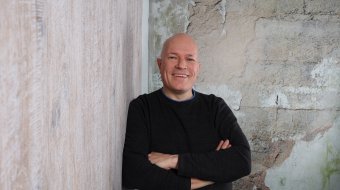
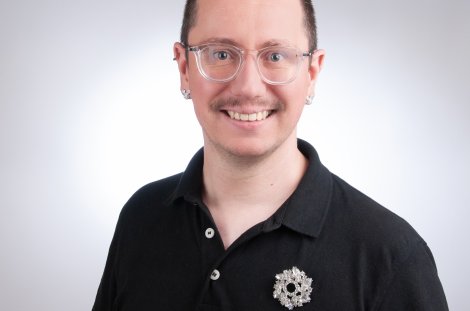
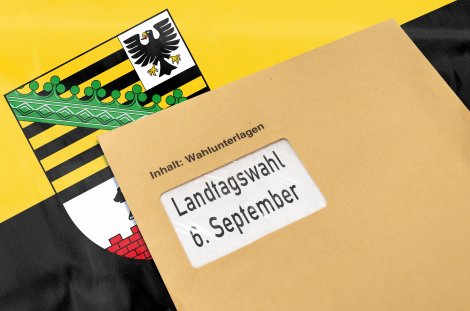
When Saxony-Anhalt elects a new state parliament on 6 September, attention will extend far beyond the state's borders. Given the AfD's strong polling figures, the election could send a signal across German politics – including for the LGBTQ+ community. SCHWULISSIMO spoke to Andreas Bösener of LSVD+ Sachsen-Anhalt.
How are queer people and LSVD+ in Saxony-Anhalt feeling about 6 September? What fears and concerns are you hearing most often from the queer community at the moment?
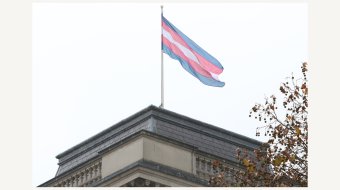
Many queer people are looking ahead to the coming state election with great concern. The AfD's strong polling figures and the prospect that it could become the largest party in the state are unsettling many people in the queer community. This concern does not come out of nowhere. In its manifestos and political statements, the AfD has repeatedly adopted positions opposing equality for queer people. Trans people in particular find the current political debates an enormous strain, because their existence and their rights are repeatedly turned into a political battleground. Both we and the LSQpRT (Lesben-, Schwulen- und Queerpolitischer Runder Tisch Sachsen-Anhalt) are increasingly hearing about trans people who are considering leaving Saxony-Anhalt. People who grew up here, live and work here and have made their home here are asking themselves whether they will still be able to live safely and independently in this state in the future. That is a serious warning sign. When people consider leaving their home region because of political developments and the social climate, it shows how political debates affect people's actual lives. At the same time, we are also seeing a great deal of solidarity and commitment. Saxony-Anhalt is not made up solely of those who mobilise against diversity. There are very many people, initiatives and organisations working every day for an open society. These are precisely the people who give us hope.
According to current forecasts, the AfD could potentially govern alone and provide the next state premier. What would that mean for the queer community in your view?
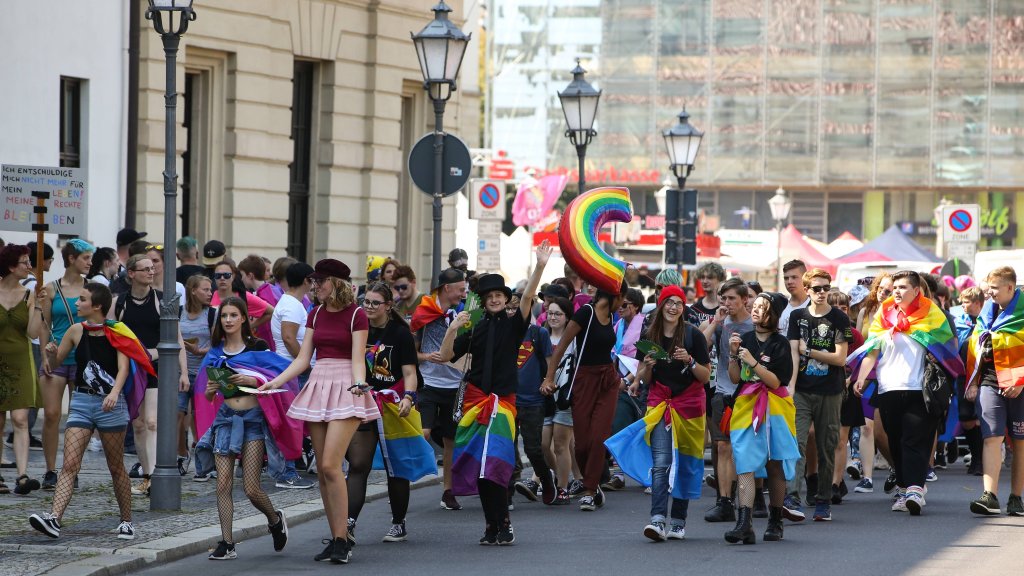
In our view, an AfD state government would pose a clear threat to queer people and to a diverse society. The AfD repeatedly calls queer people, and trans people in particular, into question. It tries to reverse social progress and often denies the legitimacy of a diverse society. The language and attitudes of governments also influence whether people feel safe and accepted. Specifically, we believe such a government would threaten funding structures, advice services, educational work and society's protection of queer people. The safety of and support for queer events such as Pride marches, known as CSDs, would also be an important issue. CSDs are not just celebrations, but demonstrations for equal rights and participation in society. They need a state that firmly supports the protection of these gatherings. If a state government strengthens anti-queer positions or dismantles relevant structures such as the police's LGBTQ+ liaison officers, this can affect how safely and with how much support such events can take place.
Although polls over the past two years have produced differing results, a certain percentage of the queer community also votes for the AfD. What is your assessment of that?
We find it difficult to understand why a party like the AfD, which repeatedly adopts anti-queer positions in its manifestos and political statements, also receives support within the queer community. A person's sexual orientation or gender identity does not automatically tell us anything about their political convictions. Queer people, too, can make political choices that we, as an advocacy organisation, view critically. Alice Weidel is often cited in this context, for example. However, the fact that a lesbian woman holds a leading role in the AfD does not change the party's political direction. What matters is not the identity of individual people, but the policies a party pursues and the effects those policies have on people.
The 2025 report on the protection of the constitution showed that right-wing extremism remains the greatest threat in Germany, and Saxony-Anhalt is unfortunately a hotspot. Then there are attacks and threats. How do you deal with that?
We take the increasing attacks and threats against queer events very seriously. A CSD is not simply a cultural event, but a demonstration for equal rights, visibility, love and participation in society. Attacks on CSDs are therefore also directed against fundamental democratic values. It is important that anti-queer incidents are reported to the police and not dismissed as supposedly trivial matters. We encourage those affected to make incidents visible and use the support structures available. From conversations with people involved locally, we know that the challenges facing CSD events have grown. Security plans, coordination and organisational requirements are taking up more time and resources. At the same time, the costs of staging such events are also rising.
In June, Saxony-Anhalt's new Landesprogramm Queer created a cross-departmental framework for queer policy for the first time. A great deal is planned – how do you view the announcements?
The existence of a Landesprogramm Queer is an important step. It shows that queer issues are not just individual matters for individual ministries, but are understood as a responsibility for society as a whole. Implementation will now be crucial. A programme alone does not change people's lives. It needs concrete measures, sufficient funding and long-term political responsibility. We expect the next state government to continue along this path and not retreat from what has already been achieved.
How has hate crime against queer people in Saxony-Anhalt changed in recent years? The number of cases has risen significantly.
We have seen anti-queer remarks and attacks become more visible and more open in recent years. Things that many people might not have said publicly a few years ago are now once again being expressed very directly and sometimes aggressively towards queer people – both online and in public spaces. This is not just about incidents that may constitute criminal offences. We also see the everyday denigration of queer people and the undermining of their sense of security. When people react aggressively to rainbow flags, for example, or object to visible celebrations of diversity and love, this shows increasing social polarisation. For many queer people, this development means thinking more carefully again about where and when they can be visible without facing hostility. At the same time, it is important to stress that Saxony-Anhalt is not defined solely by hate. There are many people working for diversity, respect and solidarity. Making that attitude visible remains a central task.
The police in Saxony-Anhalt provide LGBTQ+ liaison officers. Is that enough, or is enough being done here?
The police in Saxony-Anhalt have had LGBTQ+ liaison officers for several years now. We very much welcome the fact that this structure is now being strengthened with an additional post. The liaison officers have become an important link between the queer community and the police. For many people, it makes a big difference to have a specific contact who understands the realities of their lives and makes them feel they are being taken seriously. Trust in state institutions is crucial, particularly when it comes to anti-queer incidents. People need to know whom they can turn to without fearing that they will not be understood or taken seriously.
How does LSVD+ look back on the queer policy work of the so-called Germany coalition since 2021 – in other words, the work of the CDU, SPD and FDP?
The fact that Saxony-Anhalt has adopted a cross-departmental Landesprogramm Queer for the first time is an important step and a clear signal that queer issues are recognised as a political responsibility of the state. We would also expressly like to highlight the many people at state level who have championed queer concerns as allies in recent years. This commitment cannot be taken for granted and has helped bring queer policy issues more firmly into the political spotlight. At the same time, we believe the state programme comes very late. Many of the challenges it addresses have been known for years and have repeatedly been raised by queer organisations and advice centres. Our concern is that a good concept will ultimately become a ‘tiger in a drawer’: a comprehensive programme on paper that fails to have sufficient impact without concrete measures, funding and firm political commitment.
What are your three most important demands of the parties in the state election campaign?
First: protection and safety. The next state government must take clear responsibility for tackling anti-queer hostility and hate crime. This includes consistent support for advice services, good cooperation with the security authorities and the protection of queer events and spaces. Second: securing queer infrastructure. Advice centres, educational provision and safe spaces are not optional extras, but important elements of a democratic society. They need lasting and reliable funding. Queer people need places they can turn to for support. Third: making further progress on queer equality. The Landesprogramm Queer must be implemented and developed further. Progress is also still needed at federal level, for example by adding sexual identity as a protected characteristic to Article 3 of the Basic Law, and by achieving full equality for queer families, including in adoption law.
You touched on this at the beginning: what would you say to young queer people who are considering leaving Saxony-Anhalt because of political developments?
We understand that people are considering leaving Saxony-Anhalt in light of current political developments. This does not only affect young queer people. Adults, families, including rainbow families, and trans people in particular also tell us of their concerns about whether they can continue to live safely and independently here. When people consider leaving their home region because they fear exclusion, hostility or political setbacks, that is a serious signal. Nobody should feel that they do not belong here. At the same time, it is important to remember that Saxony-Anhalt is more than the loudest voices spreading hatred and exclusion. Every day, we encounter many committed people, initiatives, associations, colleagues and private individuals working for diversity and harmonious coexistence. Saxony-Anhalt is a diverse state that offers a good quality of life. There are many people here who approach one another with curiosity, listen and are willing to talk to each other. These encounters are crucial. Prejudice often arises where people know nothing about one another – and often disappears where people get to know each other. Our experience shows that encounters bring change. Love, respect and solidarity are stronger than hatred and incitement. That is why it is important to remain visible, talk to one another and create spaces where people can get to know each other. Our goal must be to ensure that queer people do not have to leave Saxony-Anhalt because they are afraid, but can stay here because they feel safe, accepted and at home.
Andreas, thank you very much for talking to us.