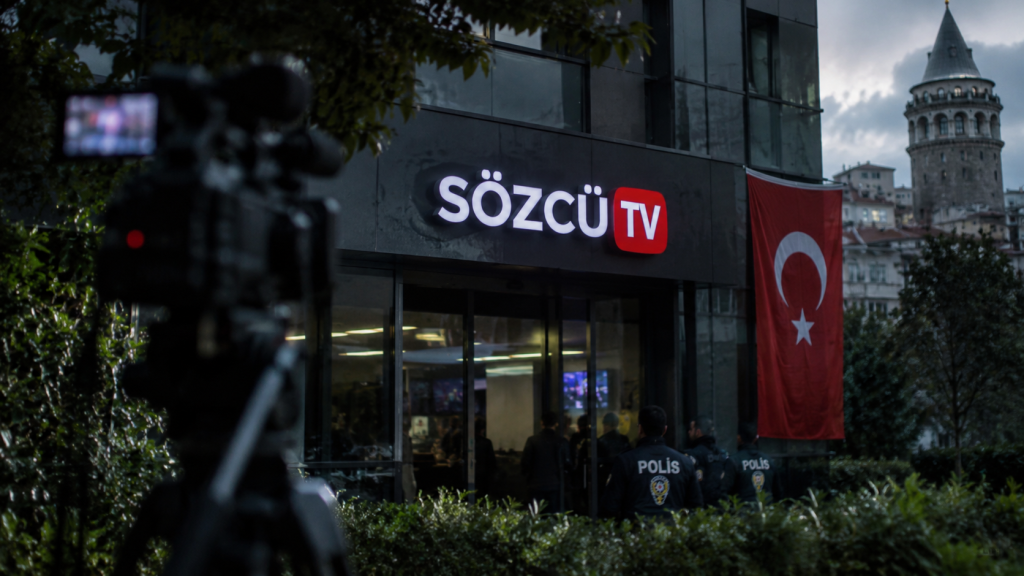
The Turkish authorities have again taken action against a media company critical of the government. The company operating the television channel Sözcü TV has been placed under compulsory administration, according to the state news agency Anadolu. The intervention affects a broadcaster that regularly covered the situation of LGBTQ+ people alongside political and social issues.
Key points at a glance
- Intervention at Sözcü TV: The Turkish authorities have appointed an administrator for the company operating the television channel, which is critical of the government. There have also been searches and arrests.
- Allegations against the owner: An arrest warrant has been issued for company owner Burak Akbay. Prosecutors accuse him of links to the Gülen movement.
- LGBTQ+ coverage affected: Sözcü regularly reported on LGBTQ+ rights, banned Pride demonstrations and state action against LGBTQ+ organisations.
- Other opposition broadcasters: According to the information available, Halk TV and TELE1 are also under compulsory administration. Critics see this as a growing restriction on independent sources of information.
- Additional political conflict: The measures come amid growing tensions over LGBTQ+ rights and a multibillion Turkish stock market scandal.
Attacks since September
The decision comes at a time when the Turkish government has been attacking LGBTQ+ people and queer associations since mid-September. Hundreds of sources of support for gay people on social media have also been blocked. Hundreds of people have been detained during raids and protests, and plans are being made to ban and dissolve more and more LGBTQ+ associations. At the same time, several opposition media companies are under state control – the very outlets that have reported on LGBTQ+ issues. The opposition television channels Halk TV and TELE1 are now also under compulsory administration.
This means three media outlets are affected that offered a large section of the Turkish population alternative sources of information to pro-government reporting. Numerous international associations, as well as the United Nations, have criticised the action. Political scientist Berk Esen sees significant consequences for public political debate. On the platform X, he said: “Particularly in an environment where pressure on the largest opposition party is increasing, shutting down these broadcasters means, in every respect, silencing the opposition's support base.” This creates additional uncertainty for reporting on LGBTQ+ rights.
LGBTQ+ issues at Sözcü
The latest intervention is also significant because Sözcü was still among the few Turkish media outlets that repeatedly reported on the situation of gay, bisexual and queer people. Both the newspaper and the television channel addressed these issues as part of their general news coverage. This included political decisions, police operations, social debates and developments abroad. State action against LGBTQ+ organisations was a recurring focus. Among other things, Sözcü reported on searches at the human rights organisation Kaos GL and the arrests of activists.
Restrictions on public events also featured in the coverage. These included banned Pride demonstrations in Istanbul (German) and Izmir, police operations against such gatherings and international Pride parades. The editorial teams also covered legislative proposals that could further restrict LGBTQ+ rights. Public statements by Turkish government politicians and political disputes over the community's place in society were also addressed. The focus was not exclusively on negative developments. Sözcü also reported on legal progress in other countries, such as the decriminalisation of homosexuality.
Allegations against media owner
The latest measures stem from investigations by the Istanbul public prosecutor's office into the owner of the media company, Burak Akbay. According to the news agency Anadolu, he has been under judicial scrutiny since 2016 over suspected links to the Gülen movement. Investigators accuse him of founding the television channel and its associated newspaper “in line with the objectives, information and instructions” of the Gülen movement. Akbay is also alleged to have held a leadership position within the organisation. The Turkish government holds the religious movement centred on preacher Fethullah Gülen responsible for the failed military coup of July 2016. President Recep Tayyip Erdogan has since regarded the organisation as a central threat to the Turkish state. Numerous people died in the attempted coup. An independent and comprehensive investigation establishing what happened at the time has yet to take place.
Concealing wrongdoing
Compulsory administration is not the television channel's first confrontation with the Turkish authorities. Last year, Sözcü TV was already forced to suspend broadcasting for ten days. The channel had previously reported on subjects including the arrest of former Istanbul mayor Ekrem Imamoglu. The opposition politician is one of President Erdogan's best-known political rivals. That shutdown already demonstrated the restrictions facing opposition television broadcasters. With the compulsory administration now ordered, the state is once again intervening in the structures of a major media company critical of the government.
Alongside the investigations into alleged links to the Gülen movement, a multibillion financial scandal is playing an important role in the current political dispute. Turkey has been gripped by a crisis surrounding investment funds since mid-September. It was triggered by suspected manipulation of share prices, which caused considerable turmoil in the financial market. According to the information available, around 455,000 investors are believed to be affected, including many small investors. The opposition press in particular reported extensively on the scandal and possible political connections.








