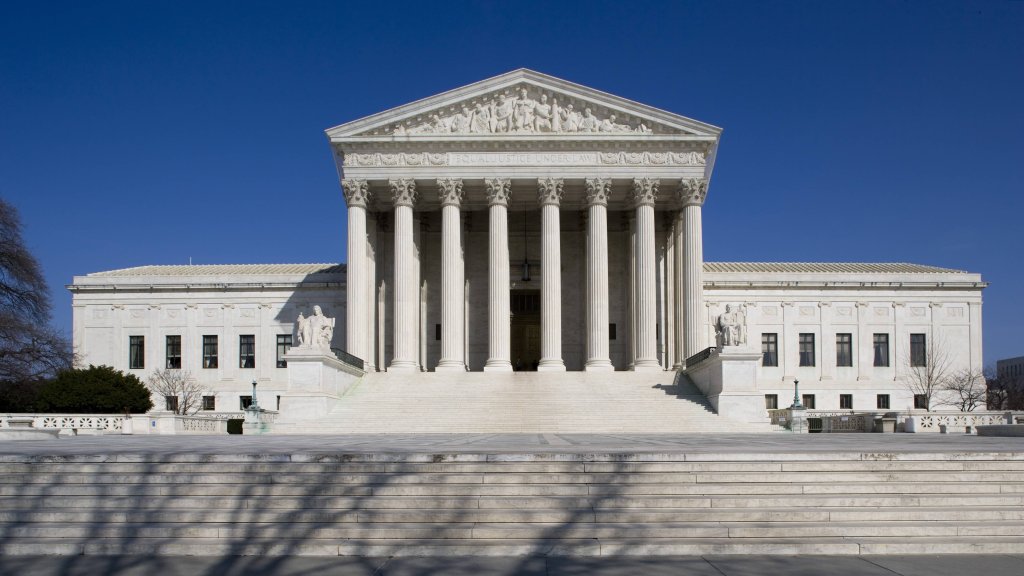
US President Donald Trump's administration has failed in its attempt to temporarily restrict medical care for trans people in federal prisons. The Supreme Court of the United States has now rejected an emergency application to that effect. This leaves in place an earlier court ruling that protects access to gender-affirming treatment for the time being.
Key points at a glance
- Success for trans prisoners: the US Supreme Court has rejected an emergency application by the Trump administration to restrict gender-affirming treatment.
- Medical care remains available: hormone therapy and other treatments previously provided may continue in federal prisons for the time being.
- Justices divided: Clarence Thomas and Samuel Alito wanted to allow the restrictions. No explanation of the court majority's reasoning was published.
- LGBTQ+ organisations welcome the decision, but point out that the legal dispute is not over.
- Another dispute before the Supreme Court: a conservative organisation is seeking a nationwide rule to exclude trans girls and women from female school sports.
600 prisoners receiving hormone therapy
However, the order in the case of “Trump v. Kingdom” does not yet constitute a final decision on the legality of the planned measures. The underlying legal proceedings will continue. The administration had planned to stop gender-affirming surgery in federal prisons and phase out ongoing hormone therapy. Certain options for adjusting outward appearance, including the use of wigs and make-up, were also to be withdrawn. Psychological and psychiatric services, by contrast, were to remain available.
According to court documents from the US federal prison agency, the Bureau of Prisons, around 600 incarcerated people received hormone treatment in 2025. A lower federal court had already ruled against the planned restrictions. US District Judge Royce Lamberth ordered that medical care must continue. In his reasoning, he cited the potential health consequences of untreated gender dysphoria. These could include depression, anxiety and suicidal thoughts. The Trump administration challenged this decision. Its justifications included security concerns within prisons. Through its emergency application, the administration sought to have the protective order suspended while the proceedings continued. The Supreme Court did not grant that request.
Two justices wanted restrictions
There were differing views on the application within the Supreme Court. Unsurprisingly, Justices Clarence Thomas and Samuel Alito would have allowed the administration to implement the planned restrictions. They favoured temporarily setting aside the lower court's decision. Both justices have been hardliners against LGBTQ+ rights on the Supreme Court for years and have also repeatedly expressed their displeasure at same-sex marriage in the US. The court's majority, however, left the existing protective order untouched. Chief Justice John Roberts issued the decision without explaining the court's legal reasoning in detail. For the prisoners affected, the order means that the medical treatments previously provided can continue for now.
LGBTQ+ organisations welcome decision
Representatives of human rights organisations and LGBTQ+ groups responded positively to the ruling from Washington. Sean Ebony Coleman, founder and executive director of Destination Tomorrow, stressed that gender-affirming treatment was part of regular healthcare. “At a time when trans people's rights are being questioned and threatened every day, protecting access to medical care is a matter of fundamental human dignity. While we welcome today's Supreme Court decision, access to gender-affirming healthcare should never have been called into question in the first place.” Kelley Robinson, president of the Human Rights Campaign (HRC), also welcomed the interim success. The organisation campaigns for the rights of LGBTQ+ people in the US. “Today, trans people in federal prisons can continue to receive the medical care they need. Denying incarcerated people necessary medical treatment solely because they are trans is discriminatory, cruel and contrary to the protections of the Eighth Amendment,” Robinson said.
Sharp criticism of health policy
In her statement, Robinson accused the president and his political supporters of deliberately attacking trans people's rights. “Trump and the MAGA extremists are obsessed with targeting our community and undermining access to basic healthcare.” The planned restrictions had been introduced following an executive order by Trump. Despite the Supreme Court's decision, the long-term outcome of the dispute remains unclear. Robinson pointed out that only temporary protection had been secured. “But the fight for the dignity and respect our community deserves is far from over,” she said.
Exclusion from women's sport
Alongside the proceedings over healthcare in federal prisons, another dispute over trans rights is occupying the US courts. The conservative legal organisation Alliance Defending Freedom (ADF) is seeking to secure a nationwide rule on the participation of trans girls and women in female school sports. The organisation has approached the Supreme Court to that end. At present, rules differ between states governed by Democrats and those governed by Republicans. The new emergency application could lead the justices to consider the underlying question of law before the case has passed through all the regular levels of the court system. The current application stems from a wrestling match in which a schoolgirl alleges she was sexually assaulted by a trans athlete. It remains unclear whether the Supreme Court will grant the organisation's emergency application and consider the nationwide rule it is seeking.








