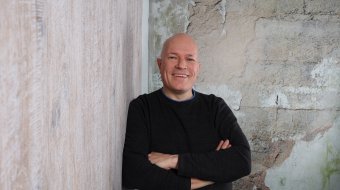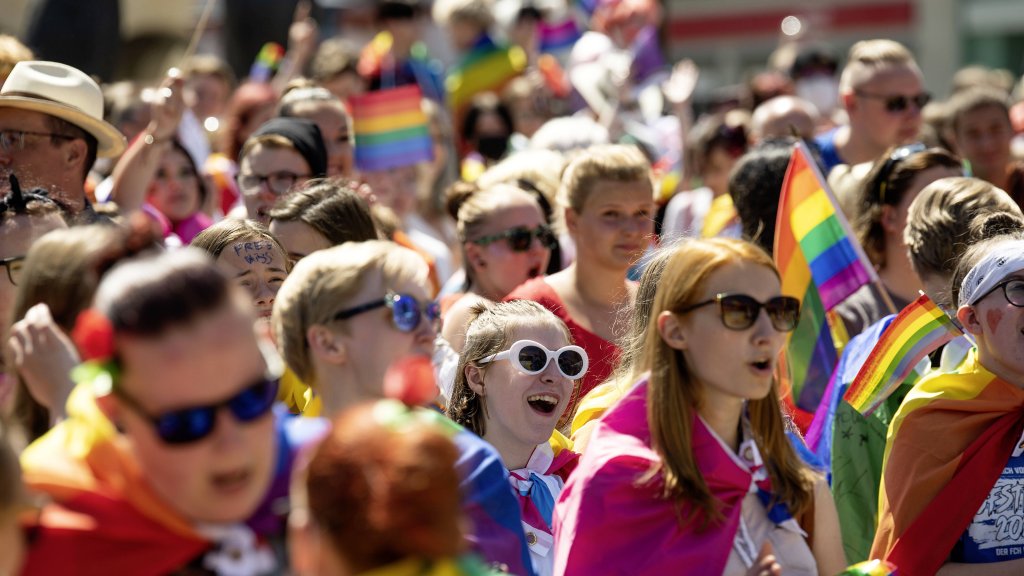
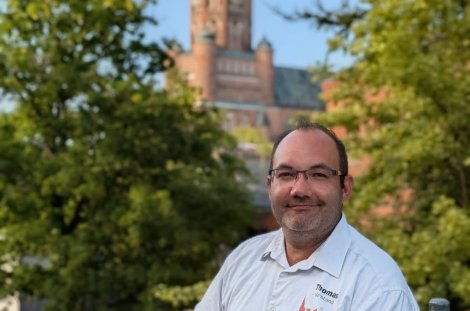
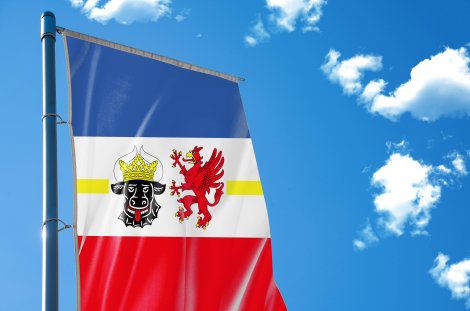
The state election on 20 September in Mecklenburg-Vorpommern is seen as a defining moment for the political direction of north-eastern Germany. Depending on the outcome, the future approach to issues such as anti-discrimination, queer visibility and support for LGBTQ+ projects could change significantly. SCHWULISSIMO spoke to Thomas Jäger, chair of Aktionsbündnis Queer in Greifswald, in collaboration with LSVD+ Mecklenburg-Vorpommern.
Which issues should be central to the state election campaign?
Above all, protecting queer people from hatred, violence and discrimination, and strengthening their participation in society, must be central to the state election campaign. It is particularly important to provide lasting, reliable funding and security for queer organisations and networks, advice services, and social and queer safe spaces throughout the state, especially in rural areas. We also need consistent further development of the state's Diversity Action Plan, more education and work to promote acceptance in schools and public institutions, and concrete measures to tackle the rise in anti-queer hate crime. What matters to us is that the rights and safety of LGBTQ+ people do not become political bargaining chips. Especially at a time when society is shifting to the right, democratic parties must take a clear stand and make it plain: queer people are an integral part of Mecklenburg-Vorpommern and must be able to live freely, safely and visibly everywhere in the state. We expect a clear and reliable commitment from the democratic parties and the future state government to protecting queer people and ensuring their equality. We also expect queer people and their representative organisations to be involved in political decisions at an early stage and on an equal footing. People must not simply talk about us, but with us.
Which issues should be central to the state election campaign?
Above all, protecting queer people from hatred, violence and discrimination, and strengthening their participation in society, must be central to the state election campaign. It is particularly important to provide lasting, reliable funding and security for queer organisations and networks, advice services, and social and queer safe spaces throughout the state, especially in rural areas. We also need consistent further development of the state's Diversity Action Plan, more education and work to promote acceptance in schools and public institutions, and concrete measures to tackle the rise in anti-queer hate crime. What matters to us is that the rights and safety of LGBTQ+ people do not become political bargaining chips. Especially at a time when society is shifting to the right, democratic parties must take a clear stand and make it plain: queer people are an integral part of Mecklenburg-Vorpommern and must be able to live freely, safely and visibly everywhere in the state. We expect a clear and reliable commitment from the democratic parties and the future state government to protecting queer people and ensuring their equality. We also expect queer people and their representative organisations to be involved in political decisions at an early stage and on an equal footing. People must not simply talk about us, but with us.
The state's queer action plan (LAP Vielfalt) has been in place since 2015. What progress do you think has been made — and where is the red–red coalition's state-level policy falling short of its ambitions?
There has certainly been progress in Mecklenburg-Vorpommern since the introduction of the state's Diversity Action Plan. But we have to be clear: much of the visible progress has not been achieved directly by the state government, but primarily through the dedicated work, often over many years, of queer associations, initiatives and institutions in the state. They have established advice services, created safe spaces, carried out educational work, organised events and made queer visibility possible even in places where political support was long absent or inadequate. One genuinely positive example at state level is the “LSBTwie*?” primer, officially published by the Ministry of Social Affairs and authorised for use in state institutions. At the same time, the red–red coalition's state-level policy falls short of its own ambitions in many areas. An action plan alone does not change the realities of people's lives. What matters is whether measures are actually implemented, adequately funded and regularly assessed for effectiveness. This is precisely where we continue to see significant shortcomings. Queer organisations, networks and projects must not remain permanently dependent on dedicated people making enormous personal efforts to compensate for a lack of consistent political action.
Hate crime against queer people has risen significantly recently, by around 40 per cent in the state. What do you see as the causes of this development?
For us, the rising figures for anti-queer hate crime reflect a general coarsening of society. Inhibitions are weakening, hatred and hostility towards others are increasingly expressed openly, and ever more often translated into action. Political and public language that deliberately denigrates minorities and normalises resentment also contributes to this. It is particularly worrying that many people simply look away when others face hostility or assault. Standing up for others seems to be taken for granted less and less. As a result, those affected experience not only the attack itself, but often also a sense of being abandoned by those around them. State politicians must therefore act more decisively: through better prevention, consistent prosecution and stronger protection for victims.
Support for the AfD in Mecklenburg-Vorpommern has more than doubled since the 2021 state election, and it is leading in the polls. What impact is this development having on queer people?
When a party that openly campaigns against queer visibility, diversity and rights already secured keeps growing stronger, it inevitably affects the social climate. Many LGBTQ+ people now wonder whether they can still be visible everywhere without a second thought, whether they can hold their partner's hand in public or speak openly about their identity without having to fear hostility or even violence. This uncertainty is particularly pronounced in rural areas. But the concern is not just about direct attacks. Many also fear that hard-won rights could be called into question again, queer organisations and networks weakened, and social exclusion politically legitimised. When hostility towards others is normalised from within parliaments, it also lowers inhibitions outside politics. For many queer people, this state election is therefore not just about political manifestos, but very directly about how freely and safely they will be able to live in Mecklenburg-Vorpommern in future.

Are you already observing concrete changes in the social climate?
Yes, we feel these changes very clearly. The increase in anti-queer assaults, targeted attacks on queer institutions, and large-scale, increasingly aggressive counter-demonstrations against Pride events alone is shocking. A climate of intimidation is emerging that, in its effect on the queer community, is at times taking on a terrorising character. The aim is to make people afraid, make them withdraw and disappear from public spaces. This is precisely what we must not accept. What we find particularly frightening is that, as politics shifts to the right, not only are anti-queer and dehumanising views becoming louder and more socially acceptable, but the dangers arising from them are also being downplayed or not taken seriously enough.
If you could give voters one message, what would it be?
Sexual and gender diversity does not concern queer people alone. It is about the fundamental question of what kind of society we want to live in: one in which everyone can live freely, safely and with self-determination, or one in which minorities once again have to live in fear and face exclusion. It is important for us to stress that being queer does not automatically mean being exclusively left-wing politically. Queer people hold different political beliefs, and LSVD+ Mecklenburg-Vorpommern sees itself as an open association for people and democratic groups from across the democratic spectrum. So far, we have been able to prevent attempts to co-opt the state association for particular extreme political positions, and that is how it should remain. And to the community itself: do not let yourselves be intimidated or made invisible. Our visibility, our voices and our solidarity are more important now than ever. Go out and vote, get involved and show that we are, and will remain, an integral part of this state.
Thomas, thank you very much for speaking to us.