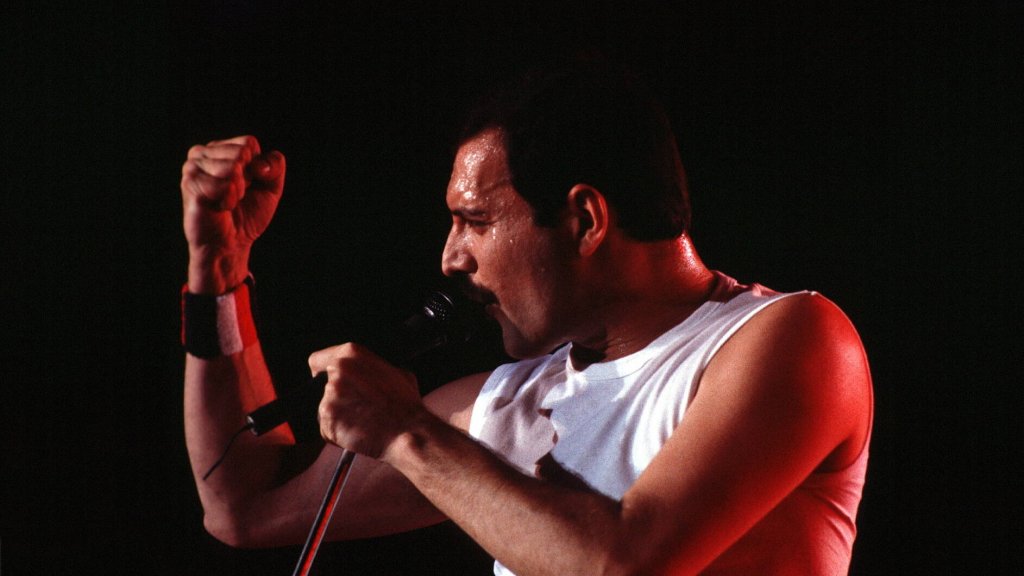
An entertainer, a musical genius, an icon of LGBTQ+ history: Freddie Mercury would have turned 80 on 5 September this year. His life was shaped by extraordinary talent, worldwide fame, great love stories and a bold approach to self-presentation that continues to influence music and pop culture today. Few singers have commanded the stage quite like Freddie Mercury. With his unmistakable voice, flamboyant style and ability to turn a stadium into a single choir, the Queen frontman became one of the most important figures in music history. At the same time, for many people in the gay community, he became a symbol of individuality, freedom and the strength to live without hiding.
From a boy in Zanzibar to a global star
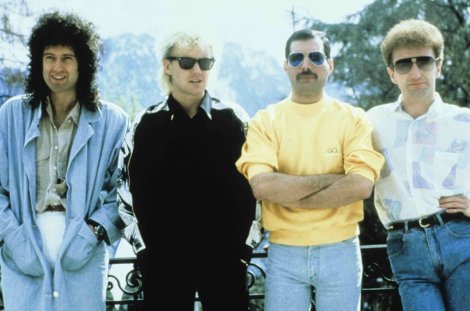
Freddie Mercury was born Farrokh Bulsara on 5 September 1946 in Zanzibar, then a British protectorate. His parents, Bomi and Jer Bulsara, belonged to the Parsi community, a religious minority with roots in Zoroastrianism. He spent part of his childhood in India, where he showed musical talent at an early age and took piano lessons. In the 1960s, the family moved to Britain. There, Bulsara studied graphic design at Ealing Technical College, later Ealing College of Art, and initially worked in various jobs before his music career took off. In 1970, he joined the band Smile, which consisted of guitarist Brian May and drummer Roger Taylor.
The change of name to Queen marked the beginning of one of rock music’s greatest success stories. Freddie Bulsara adopted the stage name Freddie Mercury – a decision that marked the start of a global career. With albums such as “A Night at the Opera” (1975), “News of the World” (1977) and “The Game” (1980), Queen became one of the biggest rock bands in the world. Songs such as “Bohemian Rhapsody”, “We Will Rock You”, “We Are the Champions”, “Somebody to Love” and “Don’t Stop Me Now” remain part of the international musical canon. Mercury was not just the singer, but also a creative driving force. He wrote some of Queen’s best-known hits himself, including “Bohemian Rhapsody”, a piece more than six minutes long with an operatic section, rock elements and an unusual structure, which was considered a musical risk at the time. Speaking about his approach to his work, Mercury once said: “I’m not going to be a rock star. I’m going to be a legend.” That sentence later became almost a description of his legacy.
Between private life and public persona
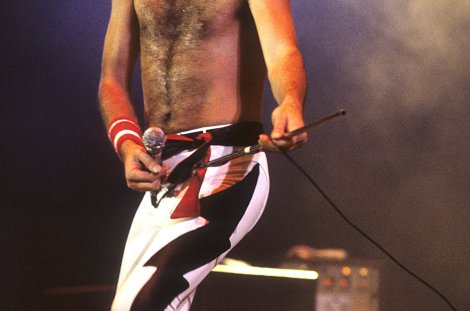
On stage, Freddie Mercury unleashed boundless energy. With his white vest, leather jacket, extravagant costumes and famous microphone stand, he became one of the most charismatic stage personalities of all time. In private, however, much remained guarded. His sexuality was long a subject of speculation in the media and among the public. Mercury himself rarely spoke about it at length. One of the most important relationships of his life was with Mary Austin. The two met in the early 1970s and were a couple for several years.
Mercury later described Austin as one of the most important people in his life. In an interview, he said: “All my lovers asked me why they couldn’t replace Mary, but it’s simply impossible.” Even after their romantic relationship ended, they remained close. Among other things, Mercury dedicated the song “Love of My Life” to her, which is still regarded as one of his most emotional compositions. Austin later lived in a house that Mercury left her. In the 1980s, Mercury had relationships with men. His long-term partnership with Jim Hutton became particularly well known. Hutton and Mercury lived together for several years and remained a couple until Mercury’s death. Hutton later wrote about their time together, describing Mercury as a very private person despite his worldwide fame.
An icon to this day
For many gay men around the world, Freddie Mercury remains an icon. His significance lies not only in his music, but also in his refusal to conform to society’s expectations. At a time when homosexuality was still heavily stigmatised and many artists kept their sexuality secret, Mercury performed with a natural confidence that inspired many people. His play with gender roles, clothing and forms of expression challenged traditional ideas of masculinity. At the same time, his relationship with his own sexuality was complex. Mercury never lived as an openly gay artist in today’s sense and spoke about it only to a limited extent in public. Nevertheless, many LGBTQ+ people see him as a figure whose presence opened up space for others.
Particularly during the years when Queen frequently worked in Munich, Mercury experienced a period of intense personal freedom. In the late 1970s and early 1980s, the Bavarian capital became an important retreat for him, where he explored the city’s nightclubs and found more open spaces for his private life. There are also reports of visits to gay saunas and meeting places on the gay scene, which were part of his hedonistic lifestyle during those years – a time when Mercury expressed his sexuality with growing confidence, while also confronting the darker sides of that life. His approach to HIV and AIDS became particularly significant. In the early 1990s, the disease was still surrounded by considerable fear, prejudice and exclusion. Mercury was one of the world’s best-known figures associated with AIDS.
Death and a final legacy
In 1991, it became known that Mercury had AIDS. On 23 November 1991, he released a statement confirming his illness. In it, he wrote, among other things: “I hope that everyone will join with me, my doctors and all those worldwide in the fight against this terrible disease.” Just one day later, on 24 November 1991, Mercury died at his home in London at the age of 45 from complications of pneumonia caused by AIDS. His death prompted mourning around the world. A few months later, the Freddie Mercury Tribute Concert for AIDS Awareness took place at London’s Wembley Stadium. Artists including David Bowie, Elton John, George Michael and many others performed to honour Mercury and raise awareness of HIV/AIDS.
More than three decades after his death, Freddie Mercury remains a presence. Queen sell millions of records worldwide, and his songs are played in films, stadiums and at major events. The film “Bohemian Rhapsody” (2018) introduced his story to a new generation and became an international box-office success. Yet Mercury’s significance extends far beyond sales figures and chart positions. He stands for artistic freedom, self-determination and the strength to be different. Another quotation attributed to him fits his life: “I’m just a musical prostitute, my dear.” The line shows his humour and self-deprecation – but also his ability to play with expectations. Freddie Mercury wanted to delight, surprise and move people. That is precisely why he remains one of the most fascinating figures in pop history. In September 2026, on what would have been his 80th birthday, it will once again become clear what made him so extraordinary and how deeply he is missed: Freddie Mercury was not just the voice of Queen. He was an artist who made millions of people feel that it was possible to be entirely themselves.