
It is Friday evening, just after nine. The bar is busy, glasses clink, and somewhere in the background, eighties disco plays softly. Two men have been standing next to each other at the bar for a few minutes. Both keep exchanging brief glances. Both smile. You could almost bet they find each other attractive. And then … nothing happens. Not long ago, things would probably have gone differently. Not necessarily more boldly, but more easily. One of them would have pulled out his smartphone, opened a gay dating app and discovered that the attractive man was standing exactly three metres away. There would have been a tentative “Hi”. Perhaps a flame emoji. Today, phones increasingly stay in pockets. And suddenly, flirting is once again a skill that many gay men have to rediscover.
Life without filters or swiping
Because there he is. Real. No filter. No professionally lit mirror selfie. No details about height, weight, star sign, favourite cocktail or sexual preferences. Above all, no little button labelled “Send message”. You actually have to open your mouth. For some, this feels rather as though someone has switched off the Wi-Fi in the middle of a conversation. Few technological developments have changed gay life as profoundly as dating apps. For many, they have been liberating. Anyone living in the countryside, newly out or still finding their feet in a new city can find people there whom they might otherwise never have met. Relationships have formed, as have friendships, and some marriages began with a simple “Hey”. Nobody would seriously claim that Grindr, Romeo, Scruff or Tinder have nothing but drawbacks. And yet something interesting is happening. More and more gay men are deleting their apps. Not for ever, often just for a weekend. Then for a month. Some reinstall them later; others do not.
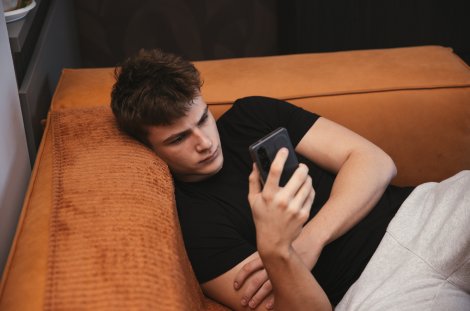
Digital detox
Posts about so-called “digital detox dates” — deliberate breaks from digital dating — are becoming increasingly common on social media. Younger men in particular describe how liberating it feels not to be constantly preoccupied with new profiles, messages or distance indicators for a change. It is a quiet trend, not one arriving with a fanfare. But it is noticeable. Because many describe a remarkably similar feeling. They are tired. Not of dating. But of swiping. Another torso. Another sunset. Anyone who regularly scrolls through dating apps knows the images. Another torso. Another nude. Another close-up of bodily openings or hard facts. In between are profile descriptions that read as though everyone hired the same ghostwriter.
Of course, behind every profile is a person. With hopes, insecurities and sometimes a decidedly dry sense of humour. But the problem lies not with the users, but with the system. Apps thrive on keeping things going. On the possibility that someone even more interesting is waiting behind the next swipe. Even sportier. Even taller. Even closer. Even more exciting. Psychologists call it the “paradox of choice”. The greater the choice, the harder it often becomes to decide. Instead of becoming more satisfied, we keep comparing. Perhaps something better is just about to come along.
If we are honest, we all know the moment: you were just messaging someone. The conversation was going well. You could have arranged to meet. Instead, you keep swiping. Just a quick look. Half an hour later, you know all the men within a five-kilometre radius. You have met none of them. Then there is something neuroscientists have long been studying. Every new message, every match and every notification activates the brain's reward system. Dopamine is released — the same chemical messenger that plays a role in other pleasurable experiences. This explains why dating apps sometimes function less like a tool and more like an addictive game. You could laugh about it, if you had not already caught yourself spending far too long online.
Never messaged him on the app?
There is a sentence you hear surprisingly often on the gay scene. “I'm not really looking for anything serious.” Experience shows, however, that this statement is about as reliable as a weather forecast for next month. Three weeks later, the same man is sitting at brunch, beaming beside his new boyfriend and explaining that it all happened “completely unexpectedly”. Perhaps that is dating's greatest irony: you look for one thing — and often find something quite different. Dating apps have changed this dynamic. They suggest that things can be planned. You set search criteria, filter by age, distance or interests and believe that love, or at least your next date, can be organised much like a hotel booking. Life, however, rarely obeys filters. Almost everyone now knows couples whose story begins with the words: “I would never actually have messaged him on an app.” Why? There are always a thousand reasons.

A laugh and a calm voice
In real life, something quite different happens. Perhaps the first thing you notice is someone's laugh. Or their calm voice. Or the way they listen to a friend. Perhaps it is simply that warm, open face that no photograph quite does justice to. Psychologists call this the halo effect. People often seem considerably more attractive in person than in a still image, because our brains process countless impressions at once: facial expressions, gestures, humour, scent, voice, eye contact. No dating app in the world can replace that. Sometimes, you do not fall in love with a face. You fall in love with someone's presence. Chemistry cannot be photographed. Everyone knows the experience.
You spend days messaging someone. The chat is going brilliantly. You laugh at the same things, send each other voice messages and eventually think: this could really work. Then you meet. And after ten minutes, you both know it is going nowhere. Not because anyone has done anything wrong. But because that hard-to-explain chemistry is missing. The opposite happens too. A date you had expected little from suddenly develops an ease that no message had hinted at. You talk. You laugh. You forget to check the time. Three hours later, the bar is already closing up. It is precisely this unpredictability that makes getting to know someone offline so exciting. It cannot be calculated. Less choice. More attention. Interestingly, couples therapists repeatedly report that people often engage more deeply with each other in person.
The reason is obvious. There is not a list of 150 other men sitting beside you in the café. Nobody suddenly pops up with a message. Nobody is now just 80 metres away. When two people sit opposite each other, at that moment there are only the two of them. That changes how they pay attention. People meeting offline often listen more closely. You observe the other person. How does he laugh? Is he polite? Can he laugh at himself? Does he only talk about his latest marathon, or does he ask questions too? It sounds obvious. But it is not. Perhaps listening is an underrated flirting technique anyway. Another lovely thing about real-life flirting is that it is never perfect. Sometimes you say something silly. You accidentally spill your drink. You tell a story whose punchline nobody understands. And that is often precisely where the charm lies.
Life without a repeat button
Dating apps give us the chance to reconsider every message. That luxury does not exist offline. Perhaps that is why many couples eventually laugh about how they first met. Because it was anything but polished. Not perfect, but wonderfully human. We still mostly fall in love with people, not algorithmic perfection. Of course, beyond their constant availability, there is another reason why apps have become so successful. They offer protection. If you message someone and get no reply, you may feel annoyed. But nobody was watching. Rejection in real life feels more immediate. That is why approaching a stranger takes courage. Yet we often overestimate the risk. Most people respond kindly. A polite rejection is not a catastrophe. It is part of life. And sometimes a failed flirtation even leads to a good acquaintance. Perhaps dating apps have got us a little too used to judging encounters by their outcome. Real life works less efficiently. Thankfully. Because sometimes something wonderful begins exactly where nothing was originally planned.

Meeting people — but where?
All well and good — but where do you actually meet gay men these days? The traditional gay bar, for example. Its demise has long been predicted. Apps would make it redundant, people said. Many have indeed had to close. Rising rents, changing nightlife habits and, not least, the pandemic have left their mark. And yet some bars are now enjoying a small renaissance. Not necessarily as places where everyone picks everyone else up. But as meeting places. As the community's living room. As places to meet friends — and sometimes get to know someone you were not looking for at all. Anyone who makes a conscious effort to look around will quickly notice that the scene has long consisted of more than just bars and clubs. There are gay sports clubs, running groups, choirs, walking groups, book clubs, film nights, political initiatives, regular social gatherings, cooking classes and volunteering projects.
Then there are street festivals, Pride celebrations, cultural events or simply Sunday afternoon in the park. It sounds almost old-fashioned. But it is not at all. It is simply normal life. By this point, however, the inner sceptic pipes up: but how do I even know whether that attractive man over there is gay? The honest answer is: you don't. The famous gaydar is probably one of the community's most persistent myths. Of course, over the years many gay men develop a feel for body language or subtle signals. You might notice when eye contact lasts a little longer than usual, or someone seems particularly interested. But all of this remains interpretation. A friend recently joked that his gaydar worked “reliably — though mainly with straight men”. That, too, will probably sound familiar to many.
Just start a conversation
Perhaps that is the real art. Not working out who is gay. But having the courage to start talking to people at all. It certainly does not have to involve a spectacular chat-up line. Quite the opposite. Something utterly ordinary is often enough. Or — if the bartender is playing the same Kylie Minogue song for the third time — a shared eye-roll. Conversations rarely begin with perfection. They begin with paying attention. While older gay men can still remember a time before apps, Generation Z is now rediscovering getting to know people offline. Not out of nostalgia. But out of a longing. For real conversations. Terms such as “slow dating” and “offline dating” are now appearing on social media. Behind them lies no new invention, but something very old indeed: people meet and get to know one another without an algorithm first deciding who supposedly belongs together. It sounds remarkably unremarkable. And at the same time, beautiful.