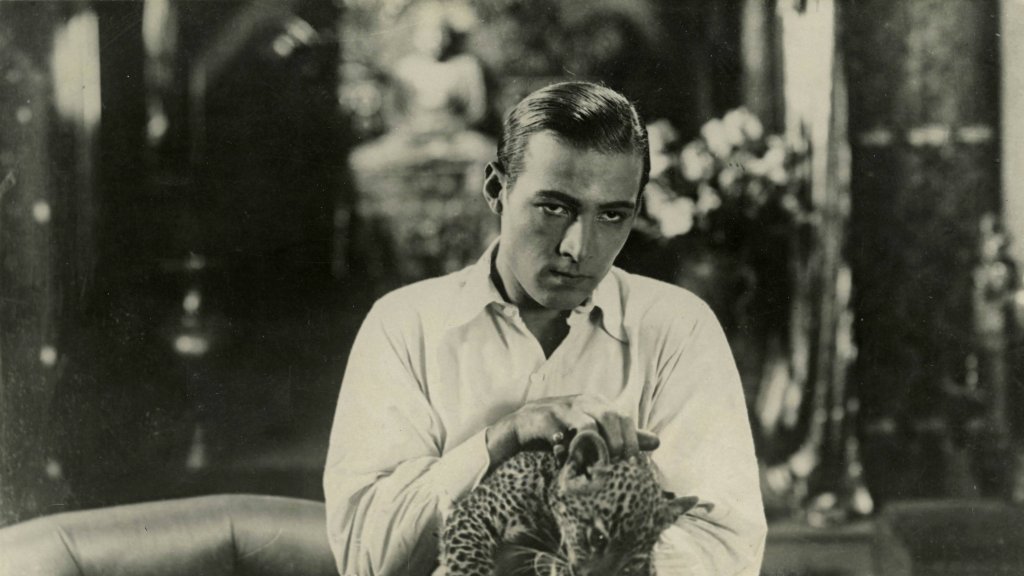
Rudolph Valentino, born Rodolfo Pietro Filiberto Raffaello Guglielmi di Valentina d'Antonguolla on 6 May 1895 in Castellaneta, Italy, is still regarded as one of Hollywood's first major male film stars and the first male sex symbol of the silent film era. With his dark eyes, striking features, elegant manners and dancing skills, he won the hearts of audiences worldwide in the 1920s. Few other actors of his time inspired comparable enthusiasm. Valentino died young a hundred years ago, on 23 August 1926 in New York City, from complications of appendicitis and the resulting peritonitis. He was just 31 years old. Rumours also persist to this day that the actor celebrated as the “King of Romance” was gay or bisexual.
From Italy to Hollywood
Valentino grew up in southern Italy and emigrated to the United States in 1913 at the age of 18. After arriving, he initially scraped by with odd jobs, working in New York as a gardener, waiter and so-called taxi dancer (a professional dancer paid to dance with guests in dance halls), among other roles. His dancing skills eventually took him to Hollywood, where he initially worked as an extra and supporting actor. His international breakthrough came in 1921 with “The Four Horsemen of the Apocalypse”. The film became one of the biggest box-office successes of its time and made Valentino a star overnight. It was followed by “The Sheik” (1921), “Blood and Sand” (1922), “Monsieur Beaucaire” (1924), “The Son of the Sheik” (1926) and other successful productions. Audiences were particularly fascinated by his roles as a mysterious, exotic and passionate lover. The famous tango in “The Four Horsemen of the Apocalypse” became an iconic scene in film history.
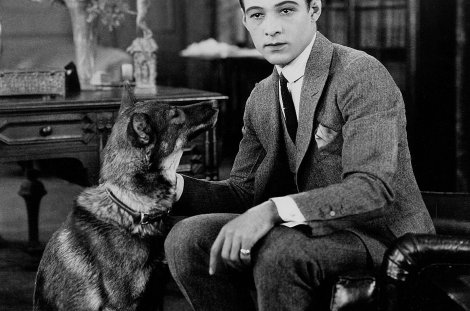
A new image of masculinity
Valentino also changed the image of male attractiveness in cinema. Where rugged or comic heroes had previously dominated, he embodied elegance, emotionality and sensuality. It was precisely this combination of masculine charisma and a comparatively gentle, romantic manner that made him the epitome of a desirable man for many women in the audience. His style influenced the fashions, hairstyles and demeanour of many men at the time. Parts of the gay community also recognised his portrayal of masculinity early on as an alternative to traditional role models. However, his success also attracted critics. Some journalists described him as too feminine because of his well-groomed appearance. The Chicago Tribune's so-called “Pink Powder Puff” article of 1926, which publicly questioned Valentino's masculinity, became particularly well known. Valentino responded with unusual assertiveness, challenging the anonymous author to a boxing match.
Lavender marriages for the public eye
Valentino married the actress Jean Acker in 1919. Acker was gay and moved in Hollywood's lesbian artistic circles. The marriage is now regarded as exceptionally unhappy; Acker is said to have refused Valentino entry to their shared hotel room on their wedding night. The couple barely lived together, and their marriage officially ended in divorce in 1923. That same year, Valentino married the actress, costume designer and artistic adviser Natacha Rambova. Rambova exerted considerable influence over his career and choice of films, repeatedly leading to conflicts with the film studios. The relationship was marked by tensions and ended in divorce in 1925.
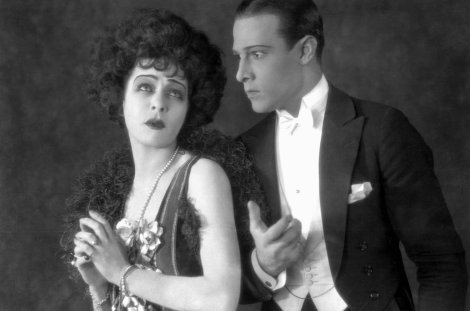
A lifetime of rumours
Despite his carefully staged public heterosexuality, numerous rumours about possible relationships with men circulated during his lifetime. Historians and biographers point out that Valentino's close circle of friends in Hollywood, his elegant appearance, his interest in fashion and his unusually sensitive manner for the time repeatedly prompted speculation. The public presentation of private lives played a major role in the film industry of the 1920s, leading some authors to suspect that both marriages may have been so-called “lavender marriages” – unions intended to conceal homosexual inclinations from the public. To this day, no documented sexual relationships between Valentino and men are known. Biographers such as Emily W. Leider and Michael Morris have discussed the question at length, examining letters, statements by contemporaries and recollections from Hollywood circles, among other sources. These sources allow for differing interpretations but provide no definitive proof.
A distinctive sensuality
Valentino's portrayal of sensuality, combining masculine and feminine elements, contributed significantly to many of his contemporaries perceiving him as extraordinary. Contemporary accounts described close friendships with male colleagues. The actor Ramon Novarro and the Swiss-born costume designer René Hubert are also repeatedly named as possible lovers. These assumptions are based predominantly on biographies published later, recollections from Hollywood and anecdotes passed down orally. Over time, this reinforced the view that the actor had indeed been gay, or at least bisexual. In August 1926, Valentino developed severe abdominal pain during a stay in New York and was admitted to the Polyclinic Hospital. Doctors there diagnosed acute appendicitis and a stomach ulcer. Following surgery, his condition deteriorated because of severe peritonitis. He died on 23 August 1926 at the age of just 31.
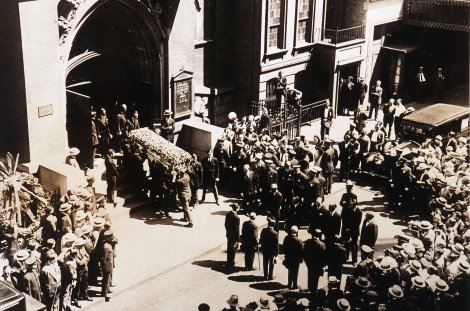
Profound grief and a legacy
His death triggered an almost unprecedented wave of grief around the world. Tens of thousands of people paid their last respects in New York, and later in California. Crowds jostled and people fainted outside the places where he lay in repose, while newspapers reported extensively on grieving fans. The enormous public outpouring is regarded as one of the first examples of mass hysteria surrounding a film star and played a decisive role in the emergence of the modern cult of celebrity. To this day, Valentino is seen as a pioneer of the romantic male screen hero.
His influence extends far beyond the silent film era, shaping later screen stars whose appeal rested not only on physical strength but also on charisma, elegance and emotional expressiveness. At the same time, the continuing debates about his sexuality reveal how closely public perception, deliberate image management and actors' private lives were intertwined in Hollywood. Regardless of whether Valentino was heterosexual, bisexual or homosexual, he remains a key figure in film history – the first male superstar whose impact reached far beyond his films.